Logline
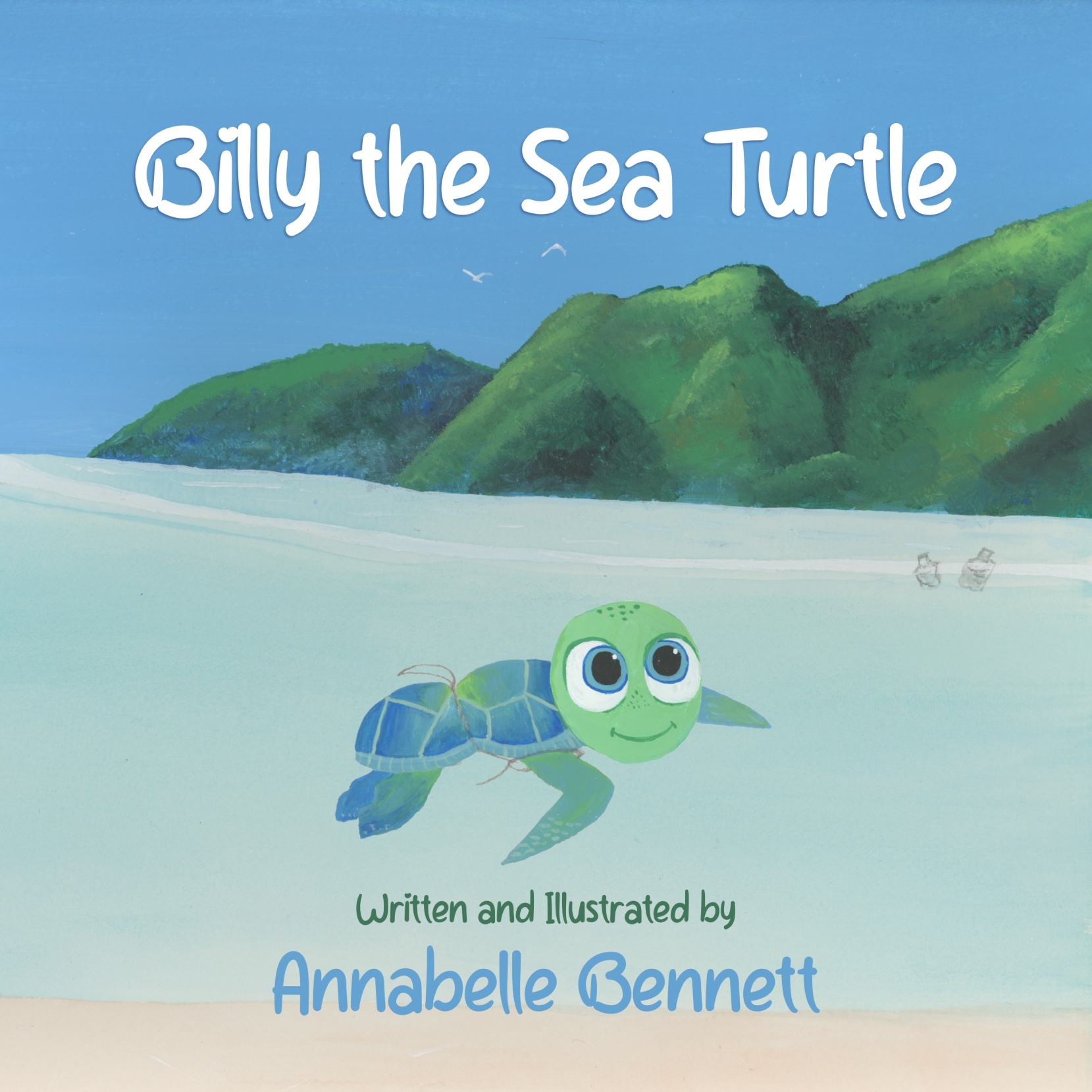
Billy, a curious young sea turtle, navigates the wonders and dangers of the ocean in episodic adventures that teach empathy, resilience, and environmental stewardship to the next generation of conservationists.
Short synopsis
Billy the Sea Turtle follows Billy, an adventurous juvenile green sea turtle, as he explores coral reefs, open ocean gyres, coastal mangroves, and deep-water trenches. Each self-contained episode drops Billy into a new ecosystem where he meets a distinct cast of marine creatures, faces a problem rooted in real ocean ecology or environmental threat, and solves it through curiosity and collaboration. The series blends underwater wonder with age-appropriate stakes — pollution, habitat loss, predators, and the mystery of migration — turning every episode into both an adventure and a lesson delivered without a lecture.
Extended synopsis
Billy hatches on a moonlit beach with hundreds of siblings, but from the first scramble to the surf, it is clear he sees the world differently. Where other hatchlings sprint for the waves, Billy pauses to investigate a ghost crab, nearly missing his window to the sea. That instinct — to slow down, look closer, ask why — becomes both his greatest asset and his recurring vulnerability throughout the series. He is not the fastest or the toughest turtle in the ocean. He is the most curious.
Each episode is structured as a standalone voyage into a specific marine environment. Billy drifts into a plastic-choked garbage patch and must organize a coalition of unlikely allies — a frigatebird, a mahi-mahi, and a grumpy octopus — to free a trapped whale shark. He navigates a bioluminescent midnight zone where nothing is as it appears and light itself is a weapon. He stumbles into a coral bleaching event and races to find the cold-water upwelling that could save the reef before the colony collapses. The threats are real; the science is embedded invisibly in the storytelling.
The recurring supporting cast grows organically across the season. There is Coral, a quick-talking cleaner wrasse who runs a reef 'station' and serves as Billy's closest friend and information broker. There is Driftwood, an ancient leatherback turtle who communicates in riddles and represents the deep memory of the ocean. And there is Shiv, a juvenile tiger shark who begins as an antagonist and slowly, across multiple episodes, edges toward an unlikely alliance with Billy — their relationship forming the emotional spine of the series.
Season one tracks Billy's first great migration — from his birth beach in the Caribbean to the feeding grounds of the open Atlantic — a natural episodic spine that gives the series geographic variety and escalating stakes. Each new region is a new world with new rules, new creatures, and a new environmental issue rendered through the lens of adventure rather than documentary. By the finale, Billy's journey home to the beach where he hatched carries genuine emotional weight because the audience has logged those miles with him.
The series is designed to expand. Season two could follow Billy into the Pacific. Season three could age him up into adulthood, shifting the tone slightly toward more complex ecological and ethical questions. The IP has franchise architecture built into the biology — sea turtles live a century, cross every ocean, and return to where they began. That is an unlimited storytelling engine.
Why it adapts
The ocean is one of animation's most cinematically rich canvases — bioluminescent deep water, coral reef cityscapes, the terrifying scale of open ocean, the chaos of a storm surge. Billy's migration route is a built-in visual world-tour that gives the production team license to design five or six completely distinct environments per season, each with its own color palette, creature design language, and physical rules. The garbage patch episode alone — a floating city of human debris that minor sea creatures have colonized into a dystopian community — is a single-episode visual concept strong enough to drive award consideration.
Billy himself is an unusually producible animated protagonist. A sea turtle has a naturally expressive face — wide eyes, a beak capable of subtle emotional reads — without requiring the kind of anthropomorphization that strains credibility. The supporting cast (a cleaner wrasse, a leatherback elder, a tiger shark antagonist) provides strong visual contrast and clear character archetypes that translate instantly to merchandise, theme park IP, and educational materials. Shiv the shark's slow arc from predator to reluctant ally is the kind of relationship arc that drives season-long audience retention and press coverage.
The environmental messaging is the sleeper commercial asset here. Studios and streamers are actively seeking IP that lets them make substantive ESG claims without sacrificing entertainment value. Billy delivers genuine conservation science — ocean acidification, microplastics, bycatch, coral bleaching — through adventure storytelling that never feels like homework. That combination of marketability, visual spectacle, franchise scalability, and purpose-driven narrative is exactly what platform buyers are paying premiums for right now.
Format recommendation
Episodic Series
The source material's episodic, ecosystem-hopping structure maps directly onto a serialized animated series format — each distinct marine environment functions as a natural episode container, while Billy's migration arc provides season-long narrative momentum. This is not feature-shaped material; its value is in repetition, world-expansion, and character accumulation across episodes. The author's own format preference aligns with what the IP structurally demands.
Comp titles
My Father's Dragon (Netflix, 2022)
Shares the tone of wonder-driven adventure with a young protagonist navigating a fantastical natural world, targeting the same 5-10 age demo with emotional depth that plays for adults too.
Kipo and the Age of Wonderbeasts (Netflix, 2020-2021)
Episodic animated series built around a curious young protagonist moving through distinct ecosystems/factions per episode, with a serialized emotional arc underneath — exact structural analog.
The Bad Guys (DreamWorks, 2022)
Demonstrates current appetite for animated content with a morally complex supporting cast, including a predator-turned-unlikely-ally dynamic that mirrors the Billy-Shiv relationship.
Prehistoric Planet (Apple TV+, 2022)
Proves premium appetite for visually spectacular, scientifically grounded natural-world storytelling aimed at family audiences — Billy occupies the same content space in animated form.
Hilda (Netflix, 2018-2022)
Best-in-class comp for episodic animated series built around an endlessly curious child protagonist encountering a new creature or world-rule each episode while a larger seasonal arc builds quietly underneath.
Audience
Primary: children ages 5-10 and their parents — the co-viewing family audience that drives Netflix and Disney+ animated originals. Secondary: eco-conscious millennial parents actively seeking content with environmental values. This audience watches Hilda, Kipo, Craig of the Creek, and Big Mouth on the older end of the family spectrum. The environmental hook also makes it a strong candidate for educational licensing, classroom streaming platforms, and partnership with conservation organizations like WWF or the Sea Turtle Conservancy.
Tone
wondrous
adventurous
emotionally grounded
eco-conscious
character-driven
episodically propulsive