Logline
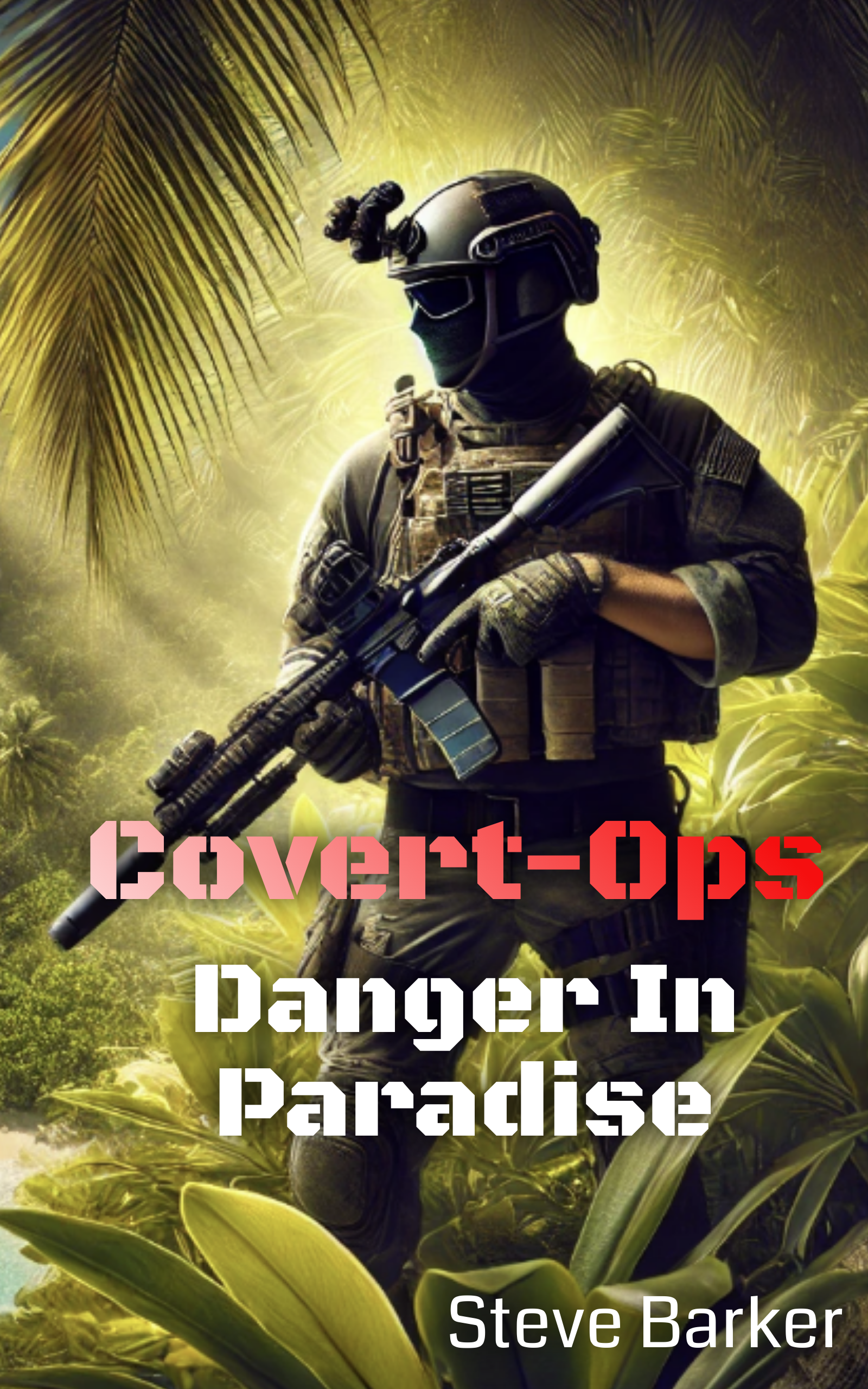
Broke, nightmare-ridden British veteran Steve and two old comrades take a £500,000 contract to evict an armed gang from a landowner's Caribbean island estate in three weeks, while their own employer quietly keeps them under surveillance.
Short synopsis
Steve, a penniless Northern Ireland veteran living in a caravan and haunted by a terrorist's misfired pistol, reunites in a pub with Simon, an ex-Hussars tank commander, and George, a proud ex-Grenadier Guardsman. Simon has a lead: Henry, a wealthy landowner whose Caribbean estate on St Halb has been seized by an armed gang tied to the corrupt police chief. The offer is £500,000, half upfront, to clear the island by any means necessary before a company anniversary celebration three weeks away. The trio spot the watcher Henry planted to vet them, then fly out to recon, build improvised explosives, recruit local allies and plan three escape routes. The brown envelope in Henry's safe is the real prize.
Extended synopsis
Steve is a former soldier whose service in Northern Ireland left him with PTSD and a recurring nightmare of a terrorist's pistol misfiring, the one time luck saved him. He lives in a caravan, broke and isolated, until a chance pub reunion puts him back with Simon, a former Queen's Royal Irish Hussars tank commander, and George, a former Grenadier Guardsman. Simon mentions a job from a cavalry contact. All three are desperate, and the shared military shorthand comes back instantly.
The contact is Henry, a wealthy landowner whose private estate on the Caribbean island of St Halb has been taken over by an armed criminal gang with ties to the local police chief. He wants it cleared within three weeks, before a major company anniversary event, and offers £500,000, half upfront, with no rules on method. At a cagey London pub meeting the trio spot and identify a surveillance operative Henry has planted to vet them. They take the job anyway, and the reader's first question is why a man hiring mercenaries is already spying on them.
Steve flies ahead to St Bethanie and works the town of Phoebe like a patrol area. He maps back streets and forest trails, tampers with the hotel's exterior light so he can leave unseen, and starts sourcing kit. Taxi driver Edward has black-market connections. Derek, a fellow ex-Royal Green Jackets veteran, agrees to ferry the team to and from St Halb by boat with no questions asked. Simon and George arrive separately and tail a man at the airport who passes a brown envelope identical to Henry's. The trio abduct and interrogate him and confirm he is Henry's own watchman. They lock him in a harbour shed with an improvised booby-trap on the door.
The rest of the supplied manuscript is preparation. George buys dog poison and heavy-duty sleeping tablets for the guard dogs and security staff. Simon sets up coded contact with Henry's loyal island contacts Sam and Abbie, and with Katie, a Jal coffee-shop owner who can supply weapons and detonators. Steve builds IEDs, claymores from gas canisters, tilt-switch traps from ballpoint pens and trip-wire alarms from household items. The team plans three observation posts and three escape routes: a seaplane, Derek's boat and a powerboat hidden in a creek. They set off before dawn on Monday. Per the table of contents, the remaining chapters cover the crossing, the observation posts, the armed assault on the estate, the eviction of the gang, retrieval of one specific brown envelope from Henry's safe, and the extraction. That envelope gives a series the question of what Henry is really paying £500,000 to get back.
Why it adapts
The book has a clear hook that fits on a poster: three middle-aged British veterans, a paradise island and a private army of criminals. The Caribbean setting gives visual contrast between the beauty of the island and the violence. The material also offers a lot of procedural material that works well on screen: a hotel light tampered with for a quiet night exit, a watcher identified in a pub and later abducted at the airport, an improvised booby-trap on a harbour shed door, claymores made from gas canisters, tilt-switches built from ballpoint pens, three escape routes including a seaplane and a hidden creek boat. These are specific, tactile sequences that give directors heist-movie pleasure without a large budget.
The characters are easy to cast and distinct. Steve is the haunted recon man with the misfire nightmare. Simon is the tank commander and the planner. George is the proud Guardsman. Edward the taxi driver and Derek the Green Jackets ferryman are strong supporting parts for character actors, and Katie the coffee-shop arms supplier is a memorable small role. The unresolved question of why Henry planted his own watchman and wants one brown envelope from his safe gives a thriller engine and a twist the series can build toward.
A producer should be aware of the risks. The supplied manuscript stops before the mission itself, so the third act is known only from the table of contents. The first half is preparation-heavy and would need compression and escalating obstacles to sustain a series. The PTSD thread is the emotional anchor and should be developed in a real way rather than used as a quick backstory label. The gang and the local police chief also need more individuality than the synopsis suggests, so the antagonists have enough presence to match the heroes.
Format recommendation
Limited Series
The book is built as a long, procedural run-up (recon, recruitment, improvised munitions, escape planning) before a single assault, and that structure suits a 6-episode limited series better than a two-hour feature, which would have to cut most of what makes the team credible. The heist-style countdown gives a natural spine of three weeks and a hard deadline. A feature version would essentially be Triple Frontier-sized and lose the character work.
Comp titles
Triple Frontier
Down-on-their-luck special forces veterans take an off-books paid job in a foreign country and find the plan is more fragile than it looked. Same premise, same male-ensemble audience.
The Gentlemen (Netflix series)
British-flavoured crime with a dry, banter-driven tone, a sprawling estate as the central location and a plot of competing interests around one property.
SAS: Rogue Heroes
British soldiers, improvised tactics and unorthodox sabotage, with a proven UK and international appetite for the military-ensemble genre.
Peaky Blinders
Damaged British ex-servicemen carrying trauma into criminal enterprise. It shows the audience for PTSD played as character rather than backstory.
Audience
Adults 25-64, skewing male but with crossover among fans of British ensemble drama. Core viewers watch Triple Frontier, SAS: Rogue Heroes, Peaky Blinders, Gangs of London and Mission: Impossible-style heist fare. Strong fit for UK broadcasters and for streamers with military and action libraries.
Tone
gritty
procedural
darkly funny
sun-bleached
ensemble-driven
tense