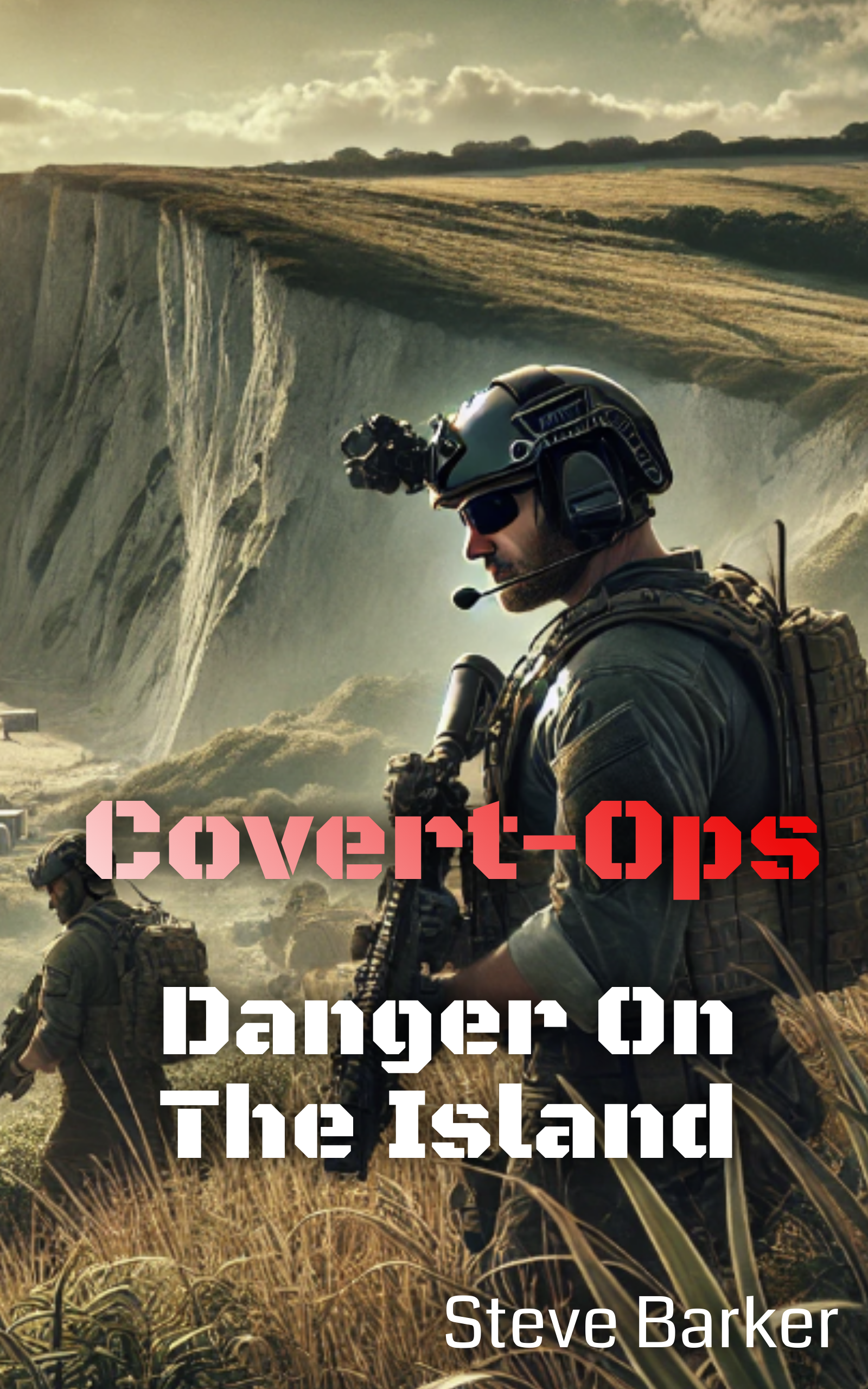
Logline
Drunk, brawling, PTSD-ravaged veteran Steve and two old comrades have three weeks to recover 200 stolen smart sniper rifles from a twenty-man mercenary crew on the Isle of Wight, before a government inspection exposes the shortfall.
Short synopsis
Steve, a combat veteran who spends his days drinking, brawling and holding his PTSD at bay in a lodge on the Isle of Wight, gets a call from old comrade Simon. Defence CEO Mark has lost 200 prototype smart sniper rifles to Dennis, a disgruntled ex-employee now working with ex-SEAL Chad's mercenaries. Dennis's crew is re-programming the weapons for criminal sale. A government inspection in three weeks will expose the missing inventory and destroy Mark's company. He can't call the police, so he hires Steve, Simon and Grenadier Guards sharpshooter George. They run recces on a fortified compound in America Woods and a Cowes boatyard, buy black-market rifles in Southampton, build bombs from fertiliser, and plan a multi-pronged assault.
Extended synopsis
Steve is a combat veteran marking time in a lodge on the Isle of Wight. He drinks, picks fights and manages the PTSD that has hollowed out his civilian life. He narrates with a cheerful, faintly sociopathic calm. His old comrade Simon calls with paid work that only men like them could take.
Mark, CEO of defence contractor Bashp Enterprises, has had 200 prototype smart sniper rifles stolen by Dennis, a disgruntled ex-employee. Dennis has teamed up with a mercenary outfit commanded by ex-US Navy SEAL Chad. They are re-programming the weapons' software to strip out the restrictions, which would make them far more valuable to criminal buyers. A government inspection in three weeks will find the inventory missing and finish the company. Going to the authorities means admitting the loss, so Mark hires Steve, Simon and George, a former Grenadier Guards sharpshooter, to get the rifles back by any means necessary.
The trio start as a recon team. They watch a fortified property in America Woods, where Dennis and about twenty armed men work on the rifles. They watch a boatyard on the Medina River in Cowes, where the finished weapons are shipped out. They map guard rotations, tunnel access, ambush sites, a bridge they can rig to blow, and a farmhouse used as a secondary base. In Southampton they buy SLR rifles and Browning pistols from a black-market contact vouched for by Caribbean allies. They also collect a prototype L115A3 from Mark so George can learn its smart optics. There they discover the opposition is already watching: Chad's man Eddie has been observing the handover. Back at the lodge they build improvised explosives from fertiliser, petrol-soaked cotton wool and nails.
The story is built on a ticking clock and escalating infiltration. In the excerpted section, Steve climbs the Cowes boat-shed roof, George covers him, Simon distracts a yard hand, and new ally Derek poses as a buyer in the sales office. Dennis is spotted on site, and a woman named Nicole is present at the compound, hinting at complications beyond the mission. The plan is a coordinated multi-phase attack: a sniper post at the woodland bridge, a three-pronged assault on the compound, simultaneous action at the boatyard, then moving all 200 rifles to the mainland before the inspection. Note that the manuscript supplied stops before that assault, so the third act is inferred from the stated plan rather than confirmed on the page.
Why it adapts
The hook fits on a poster: three broken veterans, 200 stolen smart rifles, three weeks, one holiday island. The Isle of Wight is an unusual action backdrop, with ferry crossings, woodland, tidal rivers, boatyards and seaside towns that sit oddly against mercenaries and improvised bombs. The geography makes the plan easy to follow, with each location a distinct set piece. The set pieces are the America Woods compound with its tunnel access, a bridge rigged to explode, a boat-shed roof infiltration and a river escape with cargo.
The characters give the film its edge. Steve is a drunk, brawling, cheerfully sociopathic narrator whose voiceover could define the tone, and who offers a lead actor a chance to play both comedy and trauma. George, a Grenadier Guards sharpshooter, and Simon, the connector, give clear ensemble roles. Chad, an ex-SEAL, is a credible antagonist with a mirrored skill set, and the suspicion that the team is being watched adds paranoia. Nicole is a variable that could raise the stakes if developed.
Commercially, the premise is easy to explain and affordable: mostly exterior locations and a modest cast, with the action concentrated in a few well-defined set pieces. The caution is that the supplied material is front-loaded with recon and prep, and the real payoff is the assault. A screenplay needs to compress the planning, escalate the sense of being watched early, and give the PTSD a real arc instead of leaving it as colour. The authenticity of the military detail is a selling point, but the Southampton arms purchase and bomb-making scenes need careful handling for distributors and for the depiction of weapons.