Logline
Retired operative Steve takes a £1.5 million job to pull a historian from a Russian crime syndicate, but the rescue costs him a teammate and ignites a race to a lost WWII superweapon, with a mole inside his employer.
Short synopsis
Steve, a PTSD-scarred British special forces veteran, is living quietly on the Isle of Wight with his partner Lucy when old teammate Simon offers one more job. Private military firm Guardian Security Solutions will pay £1.5 million to extract Dr Ivan Petrov, a historian who knows where a lost WWII superweapon is buried, from Viktor Readle's Russian crime syndicate in the East German village of Heinrichsberg. Steve's team inserts by Osprey, takes Petrov, and fights its way out through a village-wide firefight. The price is Billy, their embedded medic and inside man, left behind under fire. Petrov has already talked, and Readle, tipped off by a mole inside Guardian, is heading for Broome, Western Australia.
Extended synopsis
Steve is a battle-scarred former special forces soldier trying to hold a fragile peace on the Isle of Wight with Lucy, an analyst who knows exactly what his past costs him. PTSD still follows him. When Simon, his logistics specialist and oldest ally, brings a contract from Guardian Security Solutions and its ex-special forces CEO Dave Bate, Steve says yes. The job is to extract Dr Ivan Petrov, a historian who has located a lost WWII superweapon and is now held at a fortified farm complex by Viktor Readle's Russian criminal organisation. Steve reassembles his crew: Simon on logistics, George as sniper, Derek on comms, Lucy running analysis, and Billy, the undercover contact and combat medic already on the ground.
The first operation is a full-scale night raid. The team inserts by Osprey, links up with Billy, and moves on foot to the farm. They take down the perimeter guards and enter the farmhouse, where Petrov is locked in an upstairs room. The extraction starts clean, then an alarm trips and Readle's ex-military operatives swarm the village. The team fights through waves of armed men, holds a besieged safe house, survives an RPG strike, and runs for the Osprey under fire. Billy is shot dead in the final sprint. The pilot refuses to go back into the hot zone, so the team leaves his body behind.
The aftermath turns the story from rescue to chase. At Guardian, the team mourns Billy while Steve insists his death won't be wasted. Meanwhile, Readle plans his response with his enforcer Sergei Ivanov and cyber warfare specialist Natasha Belova. Before the rescue, Petrov had already given up the artefact's approximate location, somewhere in the Broome region of Western Australia. Readle redirects his whole network there. An informant inside Guardian has confirmed that Steve's team took the contract, so the race now carries a personal grudge.
The story is built to expand. Both sides know roughly where the weapon is, both are heading for Australia, and one side has a source inside the other's employer. Steve's team has been bonded by Billy's loss, and that cohesion is their main advantage against a better-resourced, equally lethal opponent. The stakes move from one hostage to a weapon that could kill countless people if Readle reaches it first.
Why it adapts
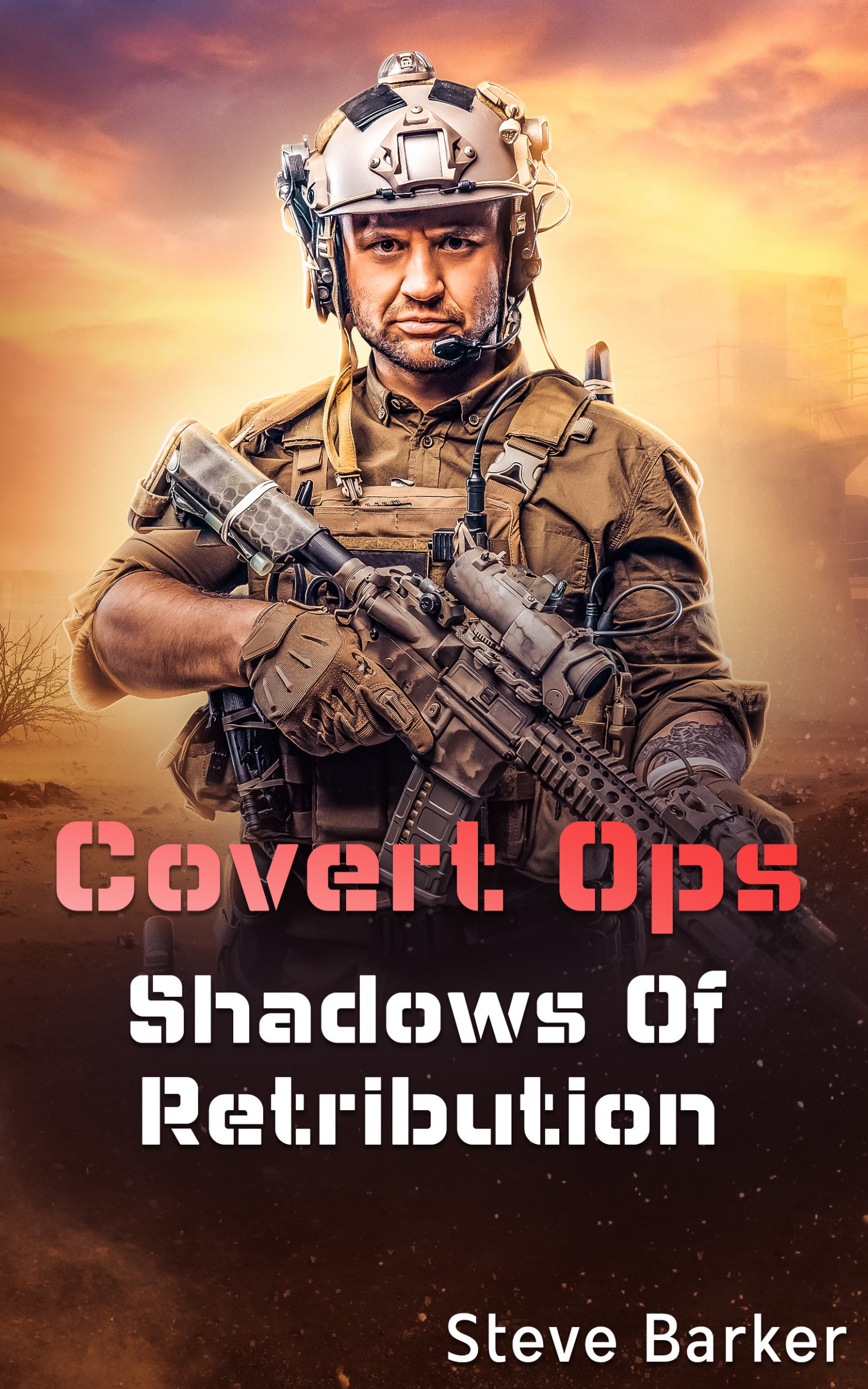
The opening movement supplies a ready-made pilot and a clear visual identity: a night Osprey insertion, a fortified farm complex in a depopulated East German village, a silent perimeter takedown, and then a full firefight through the streets, a besieged safe house and an RPG strike. These are clean, escalating set pieces with a built-in ticking clock and a hard exit. They are largely contained and location-driven, which keeps the production scale manageable. The Osprey extraction with a man left behind gives the opening a strong cliffhanger image.
The ensemble is built for series: Steve (the haunted leader with a home life to lose), Lucy (analyst and partner, inside the operation rather than waiting at home), and specialists with defined roles in Simon, George and Derek. Billy's death is the key dramatic asset. He is the warmest, most embedded character, and losing him in the final sprint gives the team a wound that can drive the rest of the season. On the other side, Viktor Readle, Sergei Ivanov and Natasha Belova give a villain structure with muscle, menace and cyber capability, and the mole inside Guardian adds a long-running whodunit.
Marketability rests on a simple hook: a squad of professionals races a Russian crime syndicate to a lost WWII superweapon, with an enemy who already knows their plans. The move to Broome gives the second half a distinct landscape of remote coast, outback and heat after the cold European opening. Honest caveat: the material reads as procedural and the characters are lightly drawn on the page, so the adaptation would need a strong writers' room to sharpen Steve's PTSD, give the team distinct voices, and build Readle into more than a generic crime boss. Those choices will decide whether this is a competent action series or a standout one.
Format recommendation
Episodic Series
The book's structure is a multi-theatre, multi-phase operation: a contained rescue in East Germany, a loss that reshapes the team, and a second front in Western Australia with a mole subplot and a recurring antagonist network. That is too much for one film, and the ensemble (six operatives plus a villain cell) needs episode-length room. Heinrichsberg could fill the first two to three episodes of a season, with Billy's death as the emotional hinge and Australia carrying the back half.
Comp titles
SAS: Rogue Heroes
A recent, high-profile show about special forces operators. It shows that audiences will follow a squad dynamic with real combat set pieces, and it sets the bar for how this team's chemistry and losses should land.
Tom Clancy's Jack Ryan
Global-chase espionage in a serialised, streaming-friendly format, with a mission that moves across continents each season. This is the closest model for the Heinrichsberg-to-Broome structure.
Extraction (2020)
A mercenary extraction built around sustained, practical-feeling action and a damaged lead. It shows the appetite for the raid-and-escape sequences that open this book.
Indiana Jones and the Dial of Destiny
A WWII-era artefact pursued by a modern antagonist network. It shows commercial interest in the 'lost wartime weapon' hook, though this project would be much grittier and more grounded.
The Night Agent
A propulsive, plot-forward thriller with a mole inside a trusted institution. It is the right comp for the informant inside Guardian as a recurring source of paranoia.
Audience
Adults 25-54, skewing male but with real crossover from viewers of ensemble action and spy dramas. Core viewers of SAS: Rogue Heroes, Jack Ryan, Strike Back, Extraction and the Mission: Impossible films, plus military-fiction readers of authors like Andy McNab and Chris Ryan. It plays well in the UK, Australia and the US, where the geography gives it local relevance in each.
Tone
gritty
propulsive
militaristic
ensemble-driven
high-stakes
grounded