Logline
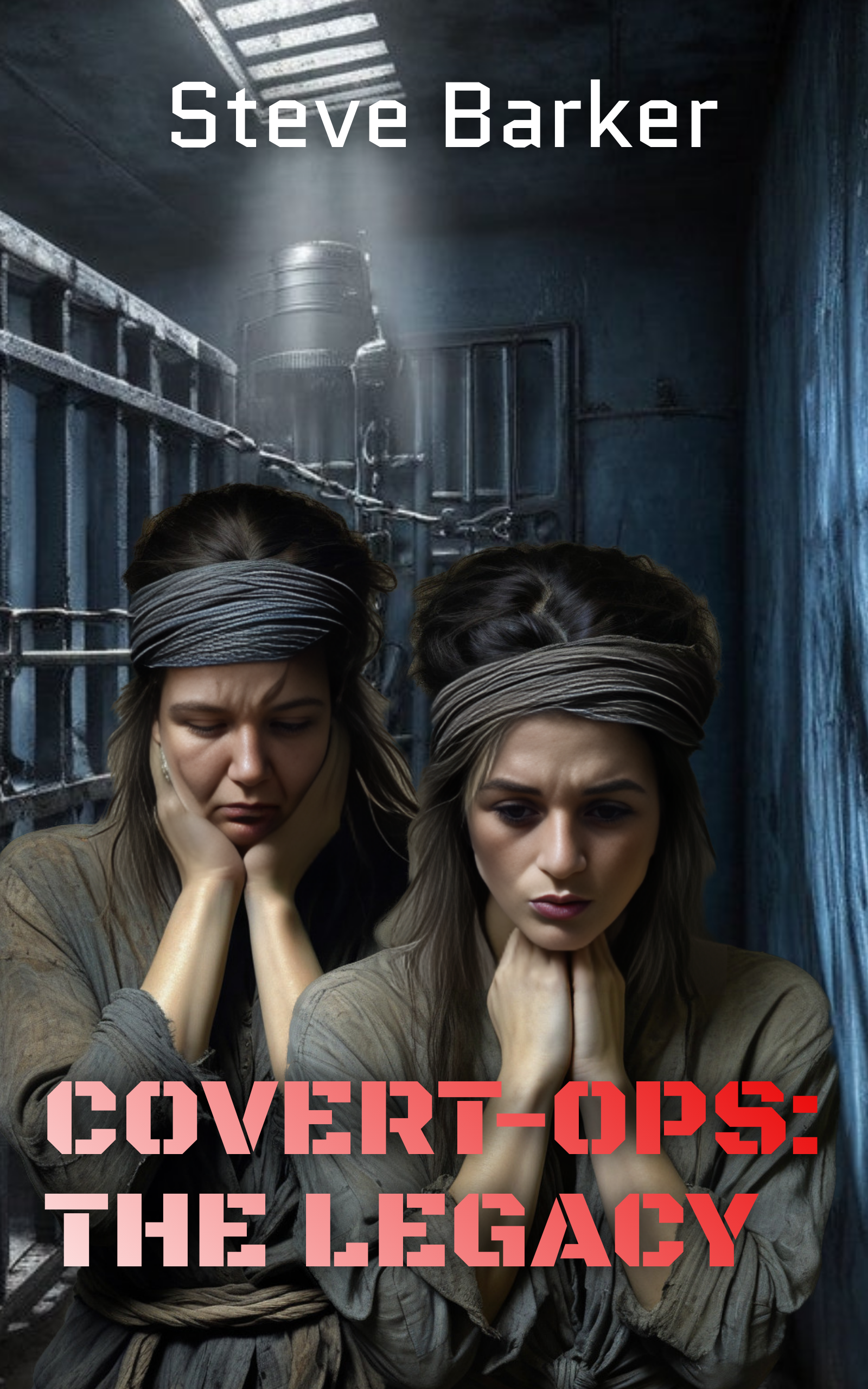
Haunted by PTSD on the Isle of Wight, retired special-forces operative Steve reunites his old team to follow a cartel's ransom trail across three countries and rescue his kidnapped daughters from the cartel whose boss his team killed.
Short synopsis
Steve, an ex-special forces operative living quietly with PTSD on the Isle of Wight, gets a call from old teammate Simon: a handwritten ransom letter demands payback for the team's killing of cartel boss Henry, and Steve's daughters Abbie and Bethanie are gone. The old unit reassembles, kills a surveillance tail on the island, and follows the cartel's instructions through dead drops and AI-voiced calls from Southampton to Bonaire. Once there, Steve abandons the cartel's script. He hits the fortified estate of contact Lucas, takes his money and intel, and executes him after learning the girls are held near Brimstone Fortress on St Kitts by a boss named Alex Acosta. The team regroups to plan the rescue.
Extended synopsis
Steve is a former special forces operative who has retreated to the Isle of Wight and is managing PTSD from a violent past. His quiet life ends when his old comrade Simon calls with news that a handwritten ransom letter has arrived. It demands retribution for the team's killing of a Caribbean cartel boss named Henry years earlier. Steve's daughters, Abbie and Bethanie, have been taken. The old team, Simon, George, Derek and Lucy, reassembles at once. Before leaving the island they identify and eliminate a surveillance tail, which shows them the cartel is already watching.
The cartel controls the pace through tightly managed dead drops and AI-voiced phone calls. Every envelope carries a blue stripe, the cartel's signature. The team is moved from a Southampton shopping centre to a West Quay Amazon locker. A one-minute call proves the girls are alive and defiant enough to taunt their captors. A map points to Bonaire, and the team flies out with suspected operatives following them from the airport.
On Bonaire the team scouts a derelict meeting site and detains a homeless man, Carlos, who becomes a useful informant. They then meet cartel contact Lucas, who reveals that the girls are not on the island. They are being held on St Kitts near Brimstone Fortress. This is where Steve stops playing the cartel's game. Instead of keeping to the cartel's timeline, he leads the team against Lucas' fortified estate. They shoot through the guards, take half a million dollars from a safe, and interrogate Lucas hard. Once he has given up the location and the name of the boss, Alex Acosta, they execute him.
The team flies to St Kitts using evasive cab tactics to shake surveillance and checks into an off-grid villa. They now have intel from Lucas' computer, stolen weapons and money. The material provided ends with them preparing a full reconnaissance of Brimstone Fortress, ahead of an assault on Acosta's operation to free Abbie and Bethanie. The series would build toward that rescue, with the cost of Steve's choices as the central pressure.
Why it adapts
The premise sells in one line: his old team's killing comes back as a kidnapping, and a handwritten ransom note sets the clock. The structure gives the show a repeatable engine of dead drops, AI-voiced calls, blue-striped envelopes and a trail of locations, each of which can anchor an episode. The visuals are strong and varied: a quiet island ambush, a Southampton shopping centre and Amazon-locker handoff, a derelict meeting site on Bonaire, a fortified estate raid, and a climax at Brimstone Fortress, a St Kitts landmark that gives the finale a distinctive location.
The cast has built-in ensemble appeal. Steve is the broken lead, Simon, George and Derek are the veterans, and Lucy is a rare partner role for a strong female actor. The daughters, who taunt their captors on the proof-of-life call, show some spirit that can be developed into real agency, and that is the main thing to expand for television. Steve's decision to break the cartel's timeline and execute Lucas is a moral hinge that sets the tone: this is not a clean-hands story, and the series can examine what the rescue costs him.
To be candid, the material has risks. The excerpt ends before the climax, so the third act and any twists need to be confirmed against the full manuscript. The cartel antagonists (Acosta, Henry's legacy) need more personality to avoid cliché, and Steve's PTSD must be shown rather than just stated. If those are addressed in development, this is a commercial, mid-budget, international-location action thriller with a strong hook and obvious casting appeal.
Format recommendation
Limited Series
The story is built from escalating clue-and-location steps (island, Southampton, Bonaire, St Kitts) that suit a six-episode structure with a clear rescue endgame. A feature would flatten it into a standard Taken-style chase. To fill six hours, the adaptation needs to deepen Steve's PTSD, the team's shared history with Henry's killing, and the daughters' side of the captivity.
Comp titles
Reacher (Prime Video, 2022–)
A hard-hitting, competence-driven lead who solves problems with violence and logistics, and a proven audience for mission-of-the-week action with a clear moral center.
Bodyguard (BBC/Netflix, 2018)
A British veteran with PTSD in a high-pressure thriller. It shows the market for a damaged protector, and the contained, tense British setting fits the Isle of Wight and Southampton opening.
Extraction (Netflix, 2020)
A traumatized mercenary on a rescue mission, with action set pieces and an international pursuit. It is a good comp for scale and tone.
Tom Clancy's Jack Ryan (Prime Video, 2018–2023)
Multi-country operations, cartel and intelligence-world threats, and a team structure. It shows the audience for globe-hopping, procedural-style action series.
SAS Rogue Heroes (BBC/Epix, 2022)
A British special-forces ensemble with banter and brutality. It supports the appeal of a tight-knit unit of old comrades.
Audience
Adults 25–54, skewing male but with crossover among parents drawn to the family-in-jeopardy hook. They watch Reacher, Jack Ryan, Extraction, Bodyguard, The Night Agent, and the Taken and John Wick films. The British setting and veteran-trauma element also appeal to UK and Commonwealth audiences for grounded action drama.
Tone
gritty
propulsive
ruthless
paranoid
ensemble-driven
revenge-fueled