Logline
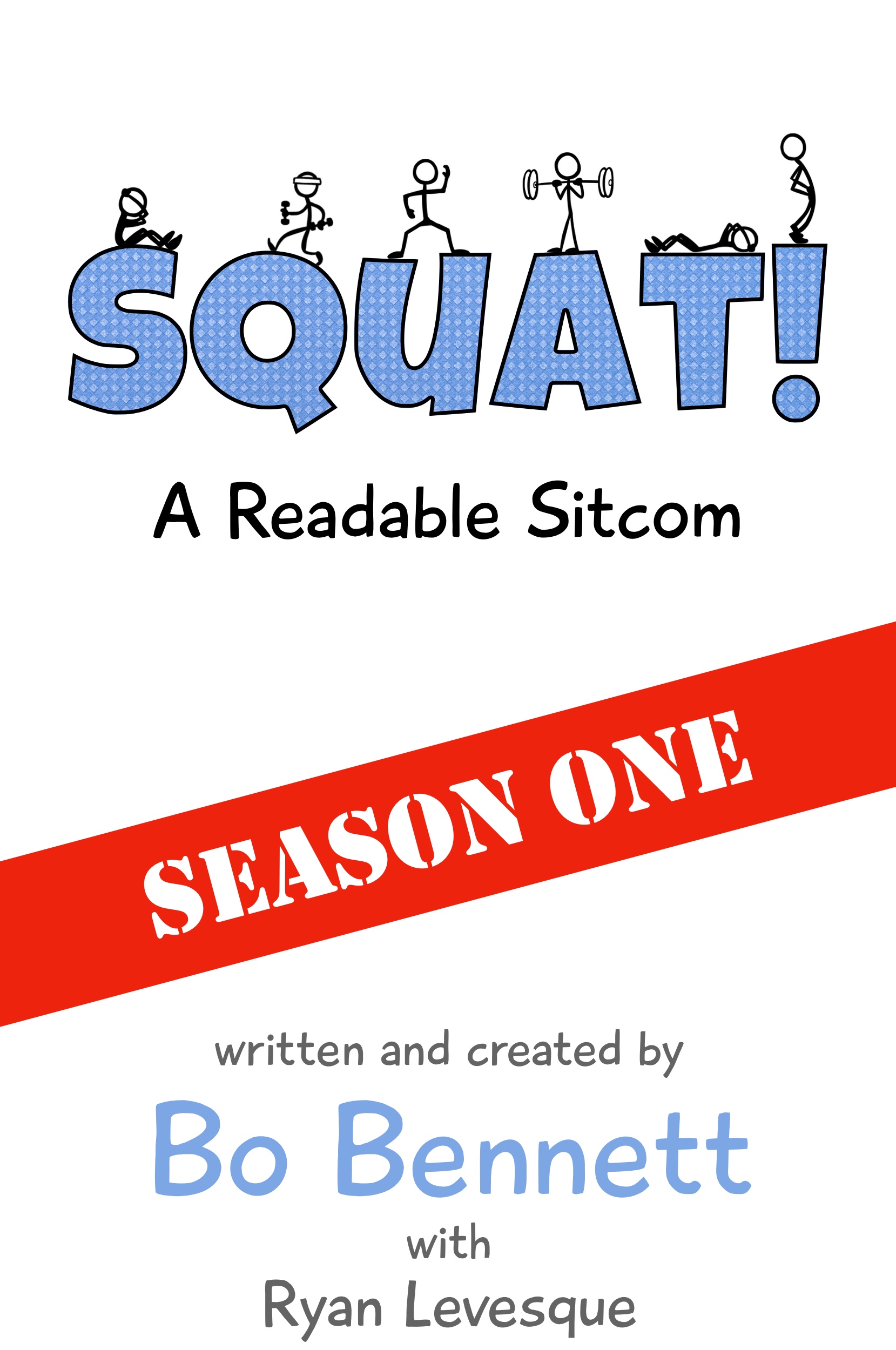
A humiliated ex-marketing hotshot takes a desperation job at a chaotic Boston suburb gym, where a crooked owner, a hapless manager, and a eerily wise janitor force him to choose between career survival and his own integrity.
Short synopsis
Scott Carter was a big-shot marketing director. Now he's selling gym memberships at Squat Spot Fitness — a suburban Boston fitness center run by the ethically elastic Jack Pemberton and managed by a well-meaning disaster of a GM. Every week brings a fresh absurd directive from ownership, a new interpersonal trainwreck among the most opinionated staff in Massachusetts, and just enough wisdom from the custodial department to keep Scott from quitting. Threaded through the chaos is a slow-burn connection with the gym's sharp fitness director — the one competent person in the building — and a running question: how much of yourself will you sell to keep the lights on?
Extended synopsis
Scott Carter is six months out of a corner office and running out of excuses. When a position opens at Squat Spot Fitness — a large, perpetually struggling gym in the Boston suburbs — he takes it not out of passion but out of rent. His title is Membership Director. His actual job, he quickly learns, is to execute whatever half-baked, legally questionable scheme owner Jack Pemberton has dreamed up that week, while convincing members, staff, and himself that everything is fine.
Jack Pemberton is not a villain in the traditional sense — he's something more dangerous: a man of absolute confidence and zero self-awareness, who genuinely believes that exploitation is just good business. His directives to Scott range from the merely embarrassing to the genuinely unethical, and each one forces Scott to improvise, triangulate, and rationalize in real time. Standing between Scott and a complete breakdown is General Manager Dave Kowalski — kind, enthusiastic, and catastrophically unqualified — who provides moral support in inverse proportion to his practical usefulness.
The gym's training floor is a pressure cooker of clashing worldviews. The ensemble of personal trainers and group fitness instructors doesn't just bicker about scheduling — they bicker about everything, and their arguments are recognizable as the exact arguments tearing apart dinner tables and comment sections across America. COVID protocols, election integrity, identity politics, conspiracy culture, multilevel marketing, cults, pronouns — it all surfaces, lightly disguised, in the specific grievances of people who spend their days arguing about squat form. The show never picks a side. It asks viewers to recognize themselves and laugh anyway.
Scott's genuine lifeline is Maya Chen, the gym's fitness director — competent, direct, and deeply tired of everyone around her. Their dynamic is the series' emotional spine: a slow-burn relationship between the only two people in the building who understand what they've gotten themselves into. And lurking at the edge of every episode is Hector, the custodian — a man of inexplicable insight and perfectly timed observation, who has clearly seen everything and judges nothing.
Each episode of Season One delivers a contained comedic crisis tied to one of Pemberton's schemes, a thematically parallel social or political argument among staff that refracts the same issue through absurdity, and a small forward movement in Scott and Maya's relationship. The cumulative effect is a workplace comedy with something to say about truth, ethics, and the cost of compromise — wrapped in a setting that is visually specific, inherently physical, and immediately recognizable to anyone who has ever signed a gym membership they immediately regretted.
Why it adapts
The gym is the pitch. Fitness centers are visually kinetic, inherently physical spaces — and Squat Spot is populated by people whose entire job is to perform movement, intensity, and confidence. That's a comedy gift. Every argument happens in front of weight racks and treadmills. Every humiliation unfolds in spandex. The setting is immediately legible on a poster and constantly generative of physical comedy that doesn't need a punchline to land.
The ensemble is the engine. A workplace comedy lives or dies on whether audiences want to spend time with the staff, and this cast — the oblivious owner, the hapless GM, the sharp love interest, the opinionated trainer floor, and the cryptically wise janitor — maps cleanly onto archetypes that actors want to play and audiences know how to love. Hector the janitor is the character agents will fight over: the straight-man oracle in a building full of chaos is a career-defining supporting role.
The political and social subtext is the differentiator and the marketing hook. In a moment when comedy that takes sides risks alienating half its audience, Squat! has a genuine structural solution: it reflects every current culture-war flashpoint through the specific absurdity of gym politics, without endorsing a position. That's a real pitch to a network or streamer nervous about controversy — and it's a real reason this show could run for multiple seasons without exhausting its premise.
Format recommendation
Episodic Series
The material is structurally a workplace ensemble sitcom — episodic by design, with recurring characters, self-contained weekly crises, and a slow-burn throughline that rewards loyalty without requiring it. The author has already scripted ten episodes, giving any buyer a ready-made first season bible. This is a broadcast or streaming comedy series, not a limited run — the gym setting and ensemble are sustainable across multiple seasons as long as Jack Pemberton keeps scheming.
Comp titles
Abbott Elementary
The closest structural analogue on air right now — a competent outsider navigating an underfunded institution run by charismatic incompetence, with a diverse ensemble whose petty conflicts carry real social weight. Same mockumentary-adjacent warmth, same workplace-as-microcosm approach.
Rutherford Falls
Shares the commitment to embedding genuine political and cultural debate inside character comedy without editorializing. Both shows trust the audience to find the mirror without being told where to look.
Acapulco
A fish-out-of-water professional dealing with an ethically flexible boss in a vividly physical workplace setting, with a romantic throughline and ensemble color. Proves the format works on streaming with the right voice.
Severance
Not a comedy comp, but a tonal reference point for how a workplace can become a genuinely cinematic contained world with its own logic, visual identity, and institutional absurdity. Squat Spot needs to feel like a place, not a set.
The Bear
Demonstrates that a physically intense, single-location workplace ensemble can command prestige attention and awards traction. The gym is Squat!'s kitchen — a space with inherent visual energy, hierarchy, and stakes.
Audience
Adults 25–49 who watch Abbott Elementary, What We Do in the Shadows, and It's Always Sunny — viewers who want their workplace comedy smart enough to have a point but never preachy about it. Secondary audience: the massive gym-culture demographic on social media (fitness content is among the highest-performing categories on TikTok and YouTube), which gives this property a built-in digital marketing lane that most workplace comedies don't have.
Tone
ensemble-driven
satirical
warmly absurdist
socially observant
slow-burn comic
workplace-specific