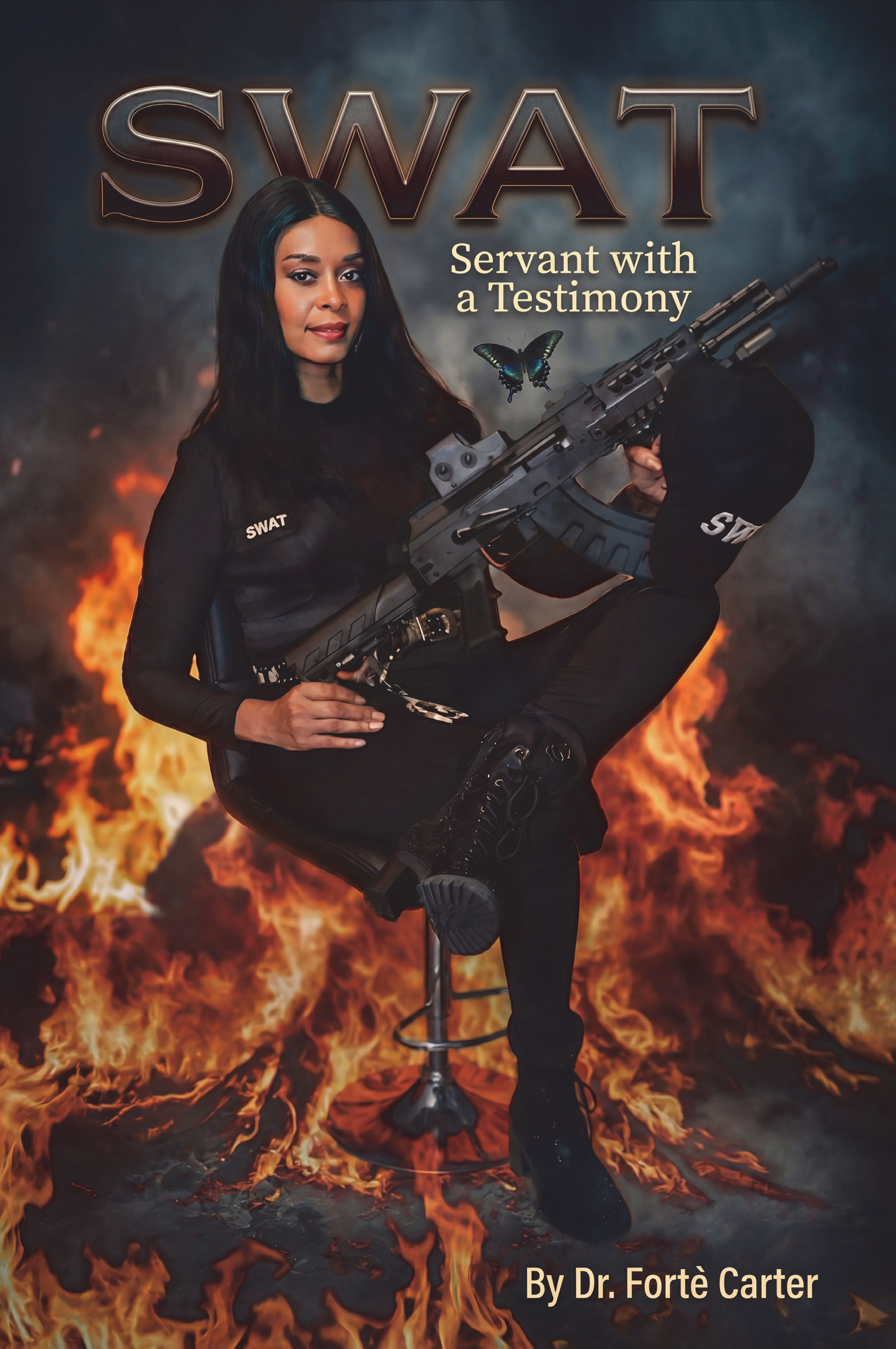
SWAT Servant with a Testimony cover
Biography / Memoir Limited Series

SWAT Servant with a Testimony

by Dr. Forte' Carter · 260 pages

Logline

A minister of music and business owner battles seven years of unexplained physical collapse and medical dismissal, fighting to reclaim her voice, faith, and identity before an unexpected connection finally breaks the cycle.

Synopsis

Dr. Forté Carter opens her memoir at the peak of her life as a respected Minister of Music, choir director, and successful travel agency owner. In April 2017, after running out of a hormone supplement, she is plunged into what she calls 'the abyss'—a seven-year descent into unexplained panic attacks, vanishing vocal range, extreme weight loss, insomnia, and physical collapse that no doctor can diagnose despite endless ER visits, hospital admissions, and specialist referrals. As her body betrays her, Forté's world contracts: she can no longer attend church, sing, or leave her house without dread. She loses her assistant to a new job, her beloved rescue dog Lady to illness, and misses funerals, weddings, and business trips, all while maintaining a flawless professional facade that hides her private disintegration. The institutional church that she served faithfully largely abandons her, though a small circle of friends persists in prayer, food, and phone calls. Isolated by the medical establishment's repeated 'nothing is wrong,' she turns to self-devised survival tools—rubber bands, essential oils, hypnosis podcasts, pineapple juice, TBN broadcasts—assembling an arsenal of eighteen remedies to endure daily life. The emotional climax arrives four years in, when her son moves cross-country to walk beside her, followed three years later by an unexpected romantic connection with a travel client named Stephan. Though the relationship never becomes permanent, his presence inexplicably breaks her emotional paralysis: within a week, her physical shackles seem to dissolve, and she returns to church for the first time in seven years, still weak but walking. The book closes in November 2024 with Forté's full restoration—her four-octave voice returned, her faith deepened, her business intact, and her identity redefined not by suffering but by survival. She reframes her ordeal as a 'black butterfly' transformation, positioning her story as a testimony and resource for others suffering unexplained, faith-tested illness, closing with scripture, affirmations, and direct encouragement to readers still in their own 'abyss.'

AI Pitch Package

For producers, scouts & managers

Logline

A once-thriving minister of music watches her four-octave voice and identity vanish overnight, and after seven years of medical dismissal and quiet faith, an unlikely love affair breaks the silence that doctors never could.

Short synopsis

Dr. Forté Carter had it all—a thriving travel business, a church choir that adored her, a voice that filled sanctuaries. Then in 2017, without warning, her body collapses into unexplained panic, vocal loss, and physical deterioration that no doctor can name. For seven years she performs wellness in public while privately unraveling, abandoned by the institution she served and clinging to a homemade arsenal of survival rituals. Her son relocates to hold her together; a client-turned-suitor named Stephan does what medicine couldn't. This is a memoir of chronic illness, faith under siege, and the strange, human catalyst that finally lets a woman sing again.

Extended synopsis
Forté Carter's memoir opens at her peak: Minister of Music, choir director, business owner, a woman whose four-octave voice and competence made her indispensable to everyone around her. Then, in April 2017, after running out of a hormone supplement, her body turns on her. Panic attacks, insomnia, vanishing vocal range, and unexplained physical collapse send her through a revolving door of ERs, hospital admissions, and specialists—all of whom find nothing. What follows is seven years she calls 'the abyss': a private disintegration hidden behind a professional mask, as she quietly stops attending church, stops singing, stops leaving her house without dread. The institutional church she gave her life to largely disappears when she needs it most, a betrayal the book doesn't shy away from, while a small, devoted circle of friends keeps her alive with food, prayer, and phone calls. Forté becomes her own doctor by necessity, assembling eighteen improvised remedies—rubber bands, essential oils, hypnosis podcasts, pineapple juice, late-night TBN broadcasts—rituals that read less like quirks and more like a woman MacGyvering her own survival in the absence of any real diagnosis. Along the way she loses her assistant, her rescue dog Lady, and years of milestones: funerals, weddings, business trips she can no longer attend. Four years into the abyss, her son moves across the country to walk beside her—the first real crack in her isolation. Three years after that, an unexpected romance with a travel client named Stephan becomes the story's turning point: not a cure, not a permanent relationship, but an emotional unlock that dissolves seven years of paralysis in a matter of days. She returns to church, still physically weak but walking, and the memoir closes in November 2024 with her voice, business, and faith fully restored. Carter frames the ordeal as a 'black butterfly' transformation and closes the book directly addressing readers still trapped in their own unexplained suffering, with scripture and affirmations as a coda. The material is testimony-first and reader-service-oriented at the end, which is a page tool, not a screen one—the adaptation's job is to live inside the seven years of the abyss and let the restoration land as earned, not narrated.
Why it adapts
The book's central visual metaphor—a four-octave voice that vanishes and returns—is a gift for a poster and a trailer: a woman standing in an empty choir loft, mouth open, no sound. The seven-year 'abyss' gives a filmmaker a clear before/after structure (thriving minister → hollowed-out shut-in → restored woman) that can be told in a two-hour arc without needing invented plot machinery. Contained locations—hospital rooms, her home, the sanctuary—keep the budget in TV-movie range while still allowing for a handful of big emotional setpieces: the ER collapses, the son's cross-country arrival, and the return to church after seven years away, which plays as the film's climactic image. The character herself is the sell: an accomplished, competent woman the audience initially envies, whose private unraveling is hidden behind a 'flawless professional facade'—a built-in dramatic irony that drives every scene. Stephan's arrival as the unexplained catalyst who succeeds where seven years of medicine failed is unconventional and non-formulaic; it resists the easy 'faith alone cured her' beat and gives the film a more human, less preachy engine, which matters for reviews and word-of-mouth in a genre often dinged for sentimentality. The 'eighteen remedies' detail—rubber bands, pineapple juice, TBN reruns, hypnosis podcasts—is a specific, unexpected texture that differentiates this from generic illness-memoir adaptations and gives a director real production design to work with.
Format recommendation
Made-for-TV / Streaming Movie

This is a single-protagonist, contained-world story—the dramatic engine is one woman's internal collapse and slow restoration, not multiple plotlines or a large cast that could sustain 6-8 episodes. A limited series would require padding the seven-year timeline with invented subplots; a tight 90-120 minute faith-based television film (Lifetime, TBN Films, or Kingdom Story Company's streaming slate) matches both the budget scale (mostly home, hospital, and church interiors) and the existing audience appetite for this exact genre of inspirational illness-to-restoration biopic.

Comp titles
Breakthrough (2019)
Faith-based true story of unexplained medical crisis and inexplicable recovery, told with restrained sentiment rather than melodrama—closest tonal and structural match.
I Can Only Imagine (2018)
Music-ministry biopic proving audiences will follow a singer's identity crisis and faith arc into a theatrical/streaming release with modest budget and strong ROI.
Unsung Hero (2024)
Recent Kingdom Story Company release demonstrating the current commercial appetite for faith-forward family perseverance stories with a musical backbone.
American Underdog (2021)
Shows how a real person's years-long unglamorous struggle (medical, professional, or otherwise) can be compressed into a satisfying single-film arc without losing emotional weight.
Audience

Women 35-65, faith-based streaming and cable audiences (TBN, Lifetime, Pure Flix, Kingdom Story Company viewers), and chronic-illness/medical-mystery audiences who followed docuseries like Diagnosis; core crossover with viewers of Breakthrough, I Can Only Imagine, and Unsung Hero.

Tone
intimate faith-driven emotionally raw restrained hopeful testimonial

Adaptation Readiness Score

71 / 100

Visual storytelling 64
Dialogue strength 58
Character distinctiveness 76
Hook strength 73
Format fit 60
Market timing 78
Strengths
  • A vivid, specific, castable lead — minister of music, choir director, entrepreneur — whose fall from public grace to private collapse gives an actor a rich arc to play
  • The music/voice metaphor (four-octave range lost then restored) is a built-in visual and audio motif that can anchor performance-driven set pieces across episodes
  • Strong alignment with the growing faith-based/inspirational content market (Kingdom Story Co., Lifetime, Peacock, TBN-adjacent audiences actively seeking testimony-driven dramas)
Adaptation friction
  • The illness has no medical diagnosis or antagonist to externalize — screen audiences will want a clearer adversarial force or ticking mechanism to sustain multi-episode tension
  • As described, this reads as a single-protagonist interior journey; a limited series ask will need additional POV threads (son, Stephan, church community, doctors) built out to justify episode count
  • Memoir source material likely leans on reflection/narration rather than scene-based conflict and dialogue — will require significant invention of confrontations, stakes, and supporting character arcs

Listed on 2026-09-13
Back to directory