Before You Start: Confirm You Can Adapt It
If you wrote the book and still control the dramatic rights, you can usually adapt it yourself. If the book was published by a traditional publisher, check your contract before you write a screenplay based on the book. Some contracts reserve film, TV, dramatic, or subsidiary rights for the author; others grant certain rights to the publisher or agent.
If you did not write the book, you need permission from the rights holder before adapting it. Writing a private sample may feel harmless, but pitching or distributing an unauthorized screenplay can create legal problems.
1. Decide What the Movie Is Really About
The first adaptation decision is not what to include. It is what the film is about.
A 300-page novel may contain family history, subplots, worldbuilding, interior monologue, and several character arcs. A feature screenplay usually lands around 90 to 120 pages, with many commercial dramas and thrillers closer to 100. That means you are choosing one main dramatic engine.
Ask:
- Who is the protagonist in the film version?
- What do they want by the end of Act One?
- What happens if they fail?
- What visible choice proves they have changed?
- What part of the book can be removed without breaking that journey?
For example, if your novel is about three generations of a family, the screenplay may focus on one daughter returning home for one decisive week. The book’s larger history can become pressure around the present-tense story.
2. Turn the Book Into a Screen Story Map
Before writing script pages, build a simple map. Divide the story into the moments that would actually appear on screen.
A useful feature structure is:
- Opening image: the world before disruption
- Inciting incident: the event that changes the protagonist’s path
- First act turn: the protagonist commits to a goal
- Midpoint: the situation changes or the truth sharpens
- Low point: the cost becomes unavoidable
- Climax: the protagonist makes the decisive choice
- Final image: the changed world or changed person
This is where many adaptations improve. You may discover that a beloved chapter is beautiful prose but weak cinema. You may also find that a small scene from the book deserves to become the spine of the movie.
3. Create or Update the Public Book Listing
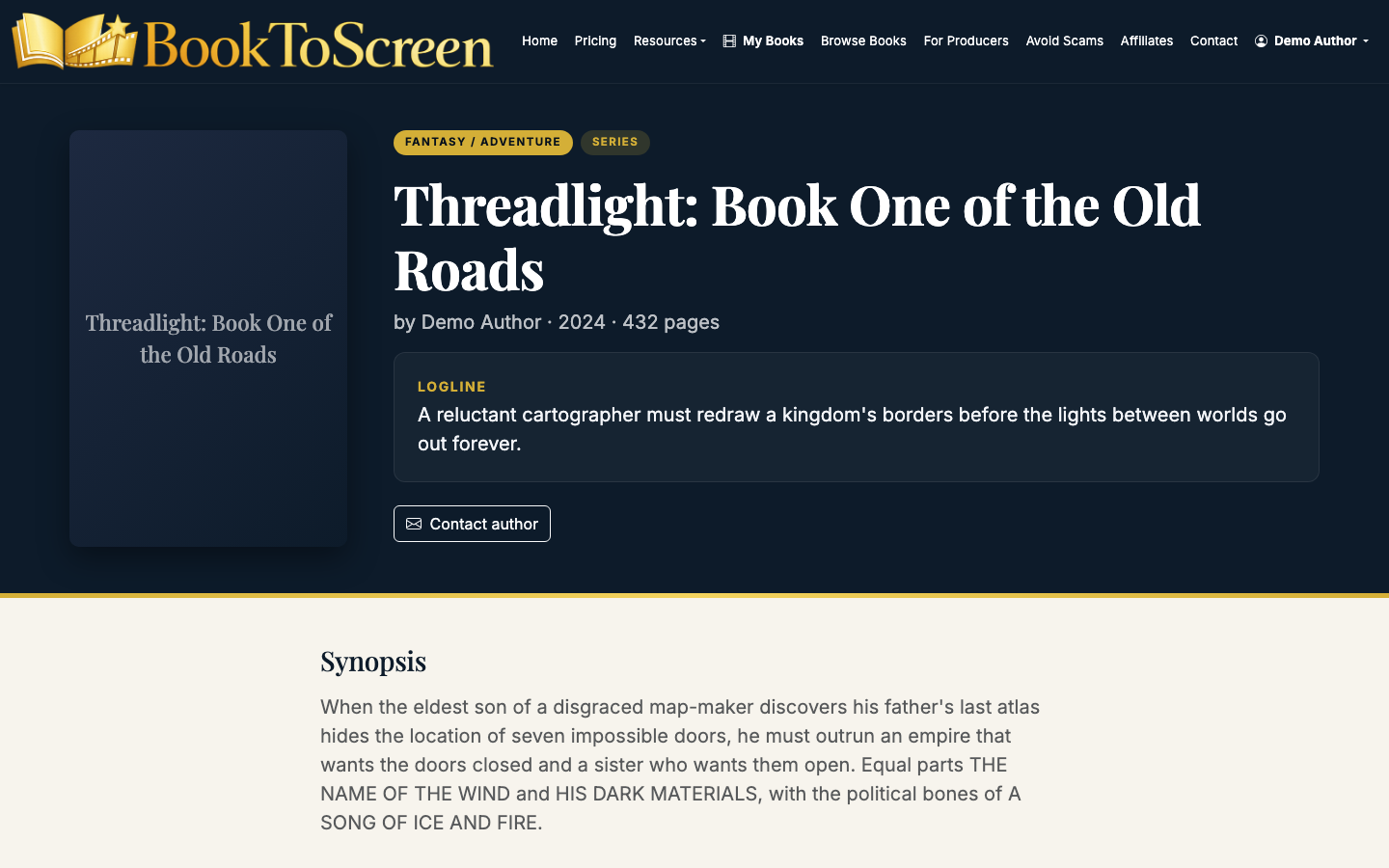
If your goal is not only to write the screenplay but also to make the book easier for producers to understand, create a clean public listing first. On BookToScreen.pro, that listing gives scouts and producers the essentials: cover, genre, logline, synopsis, comps, format preference, and buy link.
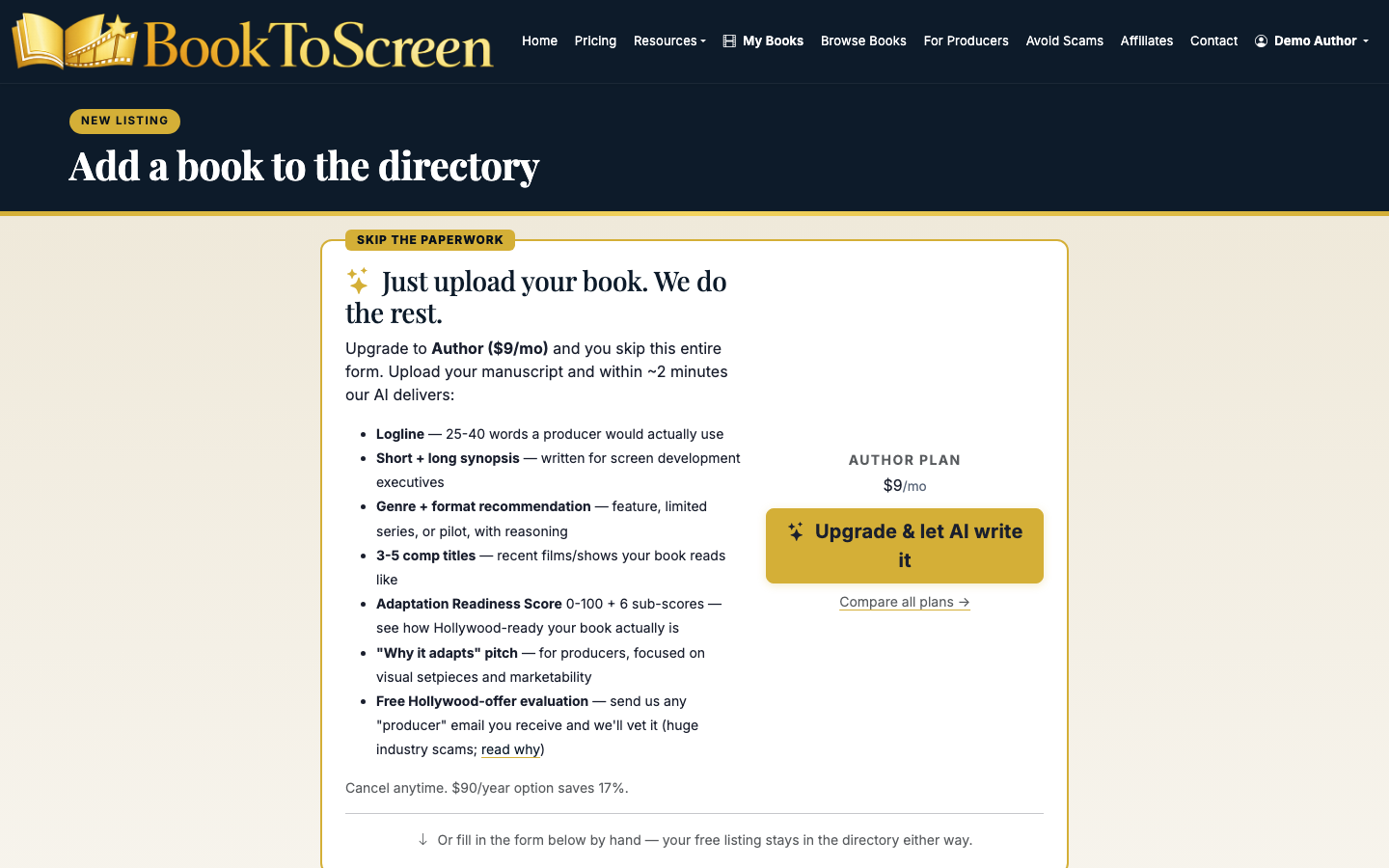
Keep the listing focused on adaptation value. A producer browsing quickly needs to know the hook, audience, genre lane, and why the story has screen potential. Do not paste your full back-cover copy if it hides the central conflict.
4. Write a Screenplay Logline
A screenplay logline is usually tighter than a book description. Aim for one sentence, roughly 25 to 40 words, that includes protagonist, setup, goal, obstacle, and stakes.
Weak version:
- A moving story about a woman discovering secrets in her family’s past.
Stronger version:
- When a burned-out hospice nurse inherits her estranged father’s motel, she must uncover why guests keep vanishing before the sheriff pins the crimes on her.
That second version gives a movie reader something to picture. It suggests role, setting, conflict, genre, and urgency.
5. Cut Characters by Function
Novels can support large casts because prose can explain relationships. Screenplays need characters who create clear pressure in scenes.
Group your book’s characters by function:
- Protagonist
- Main antagonist or opposing force
- Love interest or intimate pressure
- Mentor, skeptic, rival, or ally
- Comic relief or tonal contrast
- Exposition carrier
Then combine where possible. If three characters each deliver one important clue, one composite character may serve the film better. If a side character does not force decisions or reveal character under pressure, consider removing them.
6. Convert Internal Conflict Into External Action
This is the hardest part of how to write a screenplay from a novel. Books can say, “She realized she had never forgiven him.” A screenplay has to show the realization through behavior.
Look for internal passages and translate them into visible choices:
- Instead of remembering betrayal, the character refuses to enter a room.
- Instead of thinking about guilt, they lie to protect someone.
- Instead of explaining loneliness, they prepare dinner for two and eat alone.
- Instead of narrating fear, they delete a message before sending it.
Voiceover can work, but it should not carry the whole adaptation. If the movie depends on narration to explain every emotional beat, the scenes may not be doing enough.
7. Draft the Screenplay in Proper Format
Standard screenplay format matters because readers estimate pacing by page count. One formatted screenplay page roughly equals one minute of screen time. Use screenwriting software or a tool that exports Final Draft-compatible files.
A practical first-draft target:
- Feature film: 90 to 120 pages
- Contained thriller or drama: often 90 to 105 pages
- Comedy: often 90 to 100 pages
- Pilot: usually 30 to 65 pages depending on format
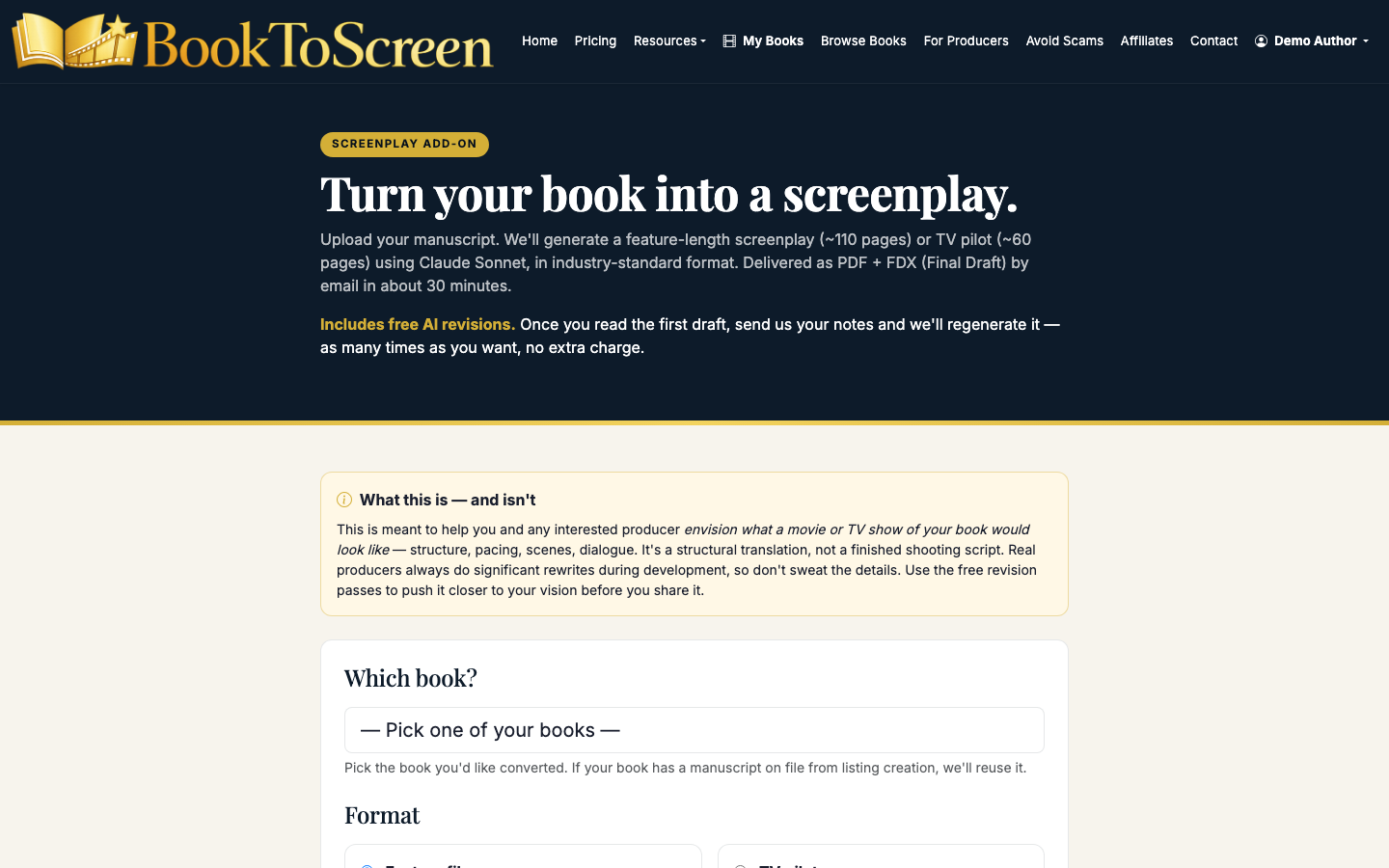
BookToScreen.pro’s AI-assisted screenplay and pilot add-on can help authors convert manuscript material into a formatted PDF and FDX/XML export, with revisions. It should still be treated as a draft process, not a magic final screenplay.
8. Revise for Scenes, Not Chapters
A chapter can cover weeks, thoughts, memories, and atmosphere. A scene usually happens in one place, in continuous time, with a dramatic purpose.
During revision, read each scene and ask:
- What does the protagonist want here?
- Who or what blocks them?
- What changes by the end?
- Could this be shorter?
- Could the conflict happen through action instead of explanation?
A strong adaptation often has fewer scenes than the book has chapters. It may also reorder events so the movie builds pressure more cleanly.
9. Package the Screenplay With Adaptation Materials
A screenplay alone is rarely enough for a cold approach. Producers also need to understand the underlying IP: audience, comps, budget range, tone, and why the book is adaptable.
A pitch package can include:
- One-sentence logline
- Short synopsis
- Genre and tone
- Comparable films or series
- Audience and market notes
- Budget tier
- Author bio and book traction
- Rights status
- Link to the public book page
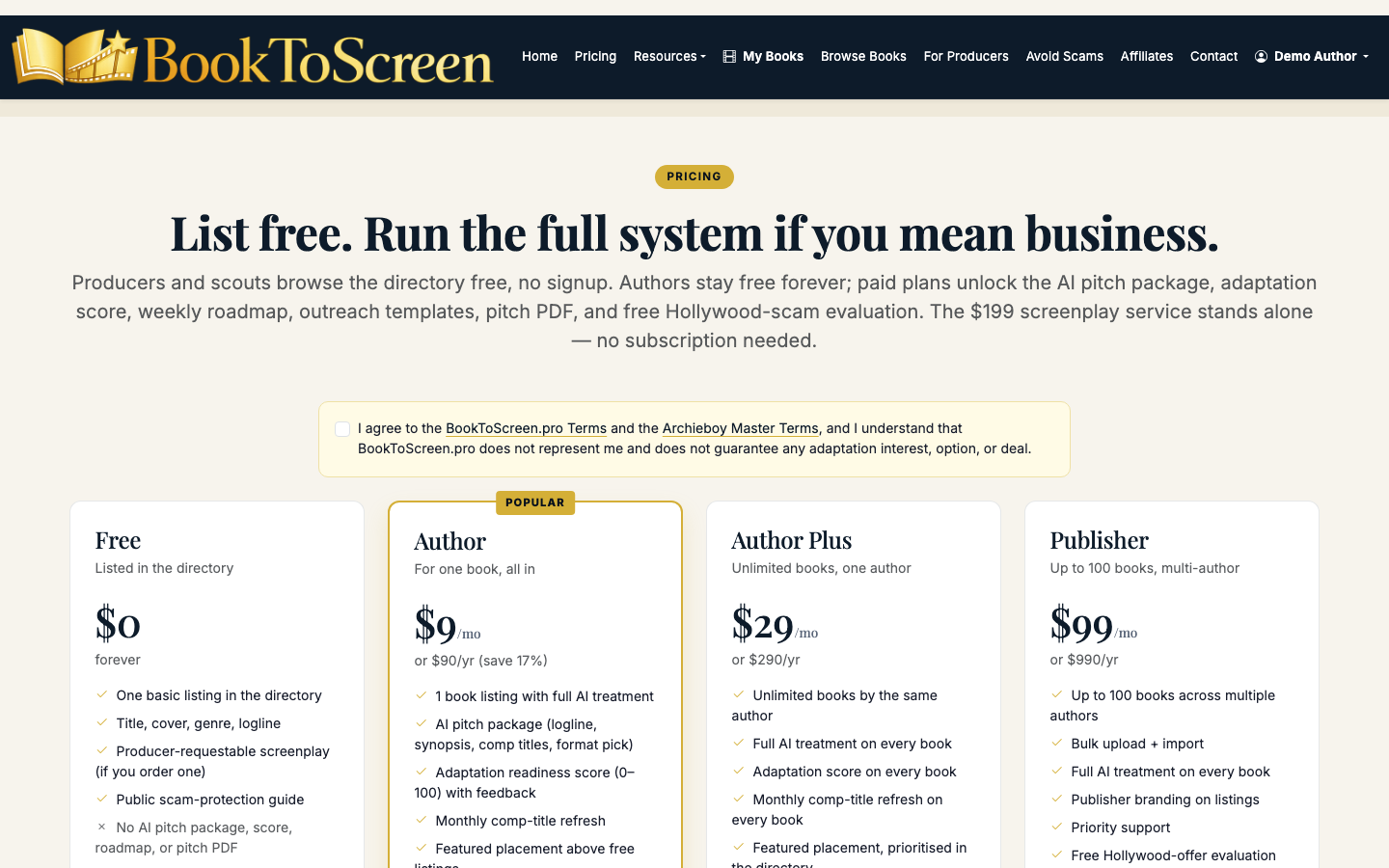
On BookToScreen.pro, authors can pair a public listing with an AI-generated pitch package and controlled screenplay access. Producers can browse the directory for free and request access through the platform.
For the bigger rights path, read How to Get a Book Made Into a Film and How to Sell Movie Rights to Your Book. If your story is better as an episodic project, compare this process with How to Adapt a Book Into a TV Show.
10. Protect Yourself When People Respond
Once you have a script or pitch package, you may receive interest from producers, managers, consultants, or companies offering paid services. Some are legitimate. Some are not.
Be cautious with anyone who promises Netflix access, guarantees a sale, or charges large upfront fees for vague “Hollywood submission” packages. Real representation and producing relationships are selective, specific, and documented.
BookToScreen.pro includes an offer-check tool that can help flag common red patterns in emails or offer letters, but it is not a substitute for an entertainment attorney.
Final Checklist
Before you call the adaptation ready, confirm that you have:
- Rights or permission to adapt the book
- A clear movie premise, not just a summary of the novel
- A scene map with a beginning, middle, and end
- A focused cast
- Internal conflict translated into visible action
- A properly formatted screenplay draft
- A pitch package or book listing for producers
- A plan for evaluating offers and avoiding scams
That is the practical answer to how to convert a book into a screenplay: reduce the story to its strongest screen engine, rebuild it scene by scene, and package it so industry readers can understand the opportunity quickly.