1. Decide Whether Your Book Has a TV Engine
A strong TV adaptation needs more than a good plot. It needs repeatable tension. Before writing a pilot or paying for any adaptation service, ask whether your book can support multiple episodes or seasons.
Look for:
- A central character with unresolved internal conflict
- A world that can generate new stories after the book’s main plot
- Relationships that change under pressure
- A premise that can be summarized in one sentence
- Stakes that can escalate across episodes
Memoirs, literary novels, thrillers, fantasy, romance, true crime, and historical fiction can all work for television, but they do not work for the same reason. A memoir may become a limited series. A detective novel may become a returning procedural. A fantasy novel may need a season arc with a clear budget tier.
2. Choose the Right TV Format
The first major creative decision is format. Producers will want to understand what kind of show you are imagining, even if they later reshape it.
Common formats include:
- Limited series: Best for a closed story with a defined ending, often 4-8 episodes.
- Ongoing drama: Best for books with a continuing world, ensemble cast, or franchise potential.
- Half-hour comedy or dramedy: Best when the voice, relationships, or situation can generate recurring episodes.
- Anthology: Best when the book’s themes or setting can support a different story each season.
- Young adult series: Often built around identity, relationships, mystery, or coming-of-age stakes.
If you are unsure, map your book into three versions: a feature film, a limited series, and an ongoing series. The version that creates the clearest episode breaks is usually the strongest TV path.
For a film-focused version of this process, see How to Adapt a Book Into a Screenplay.
3. Build a Public Listing for the Book
Before someone can consider your book for adaptation, they need a clean, credible place to understand it quickly. That means a public page with the essentials: cover, logline, synopsis, genre, comps, format preference, and a way to contact you.
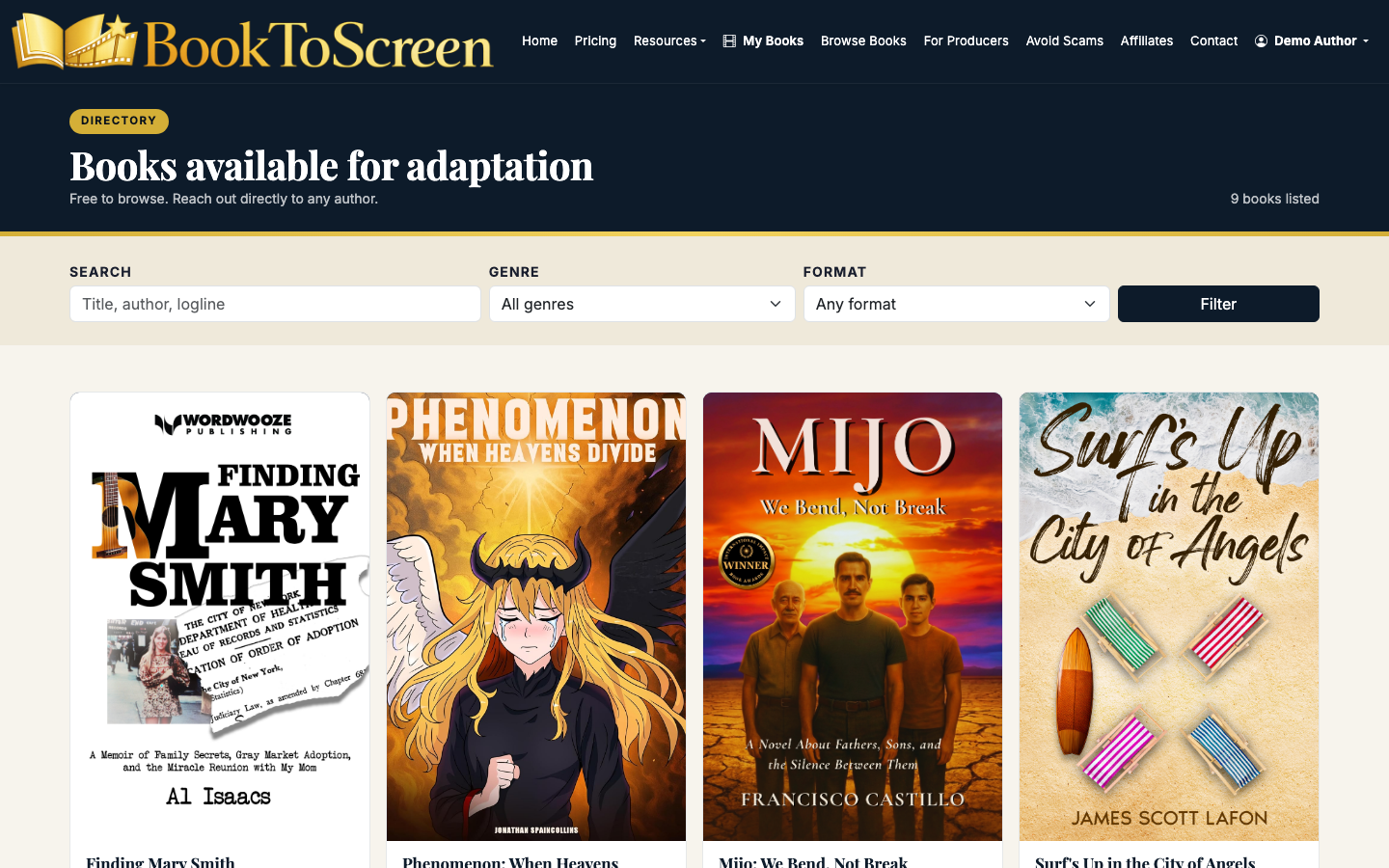
On BookToScreen.pro, authors can create a free public listing so producers, scouts, and lit managers can browse the book without asking for materials by email first.
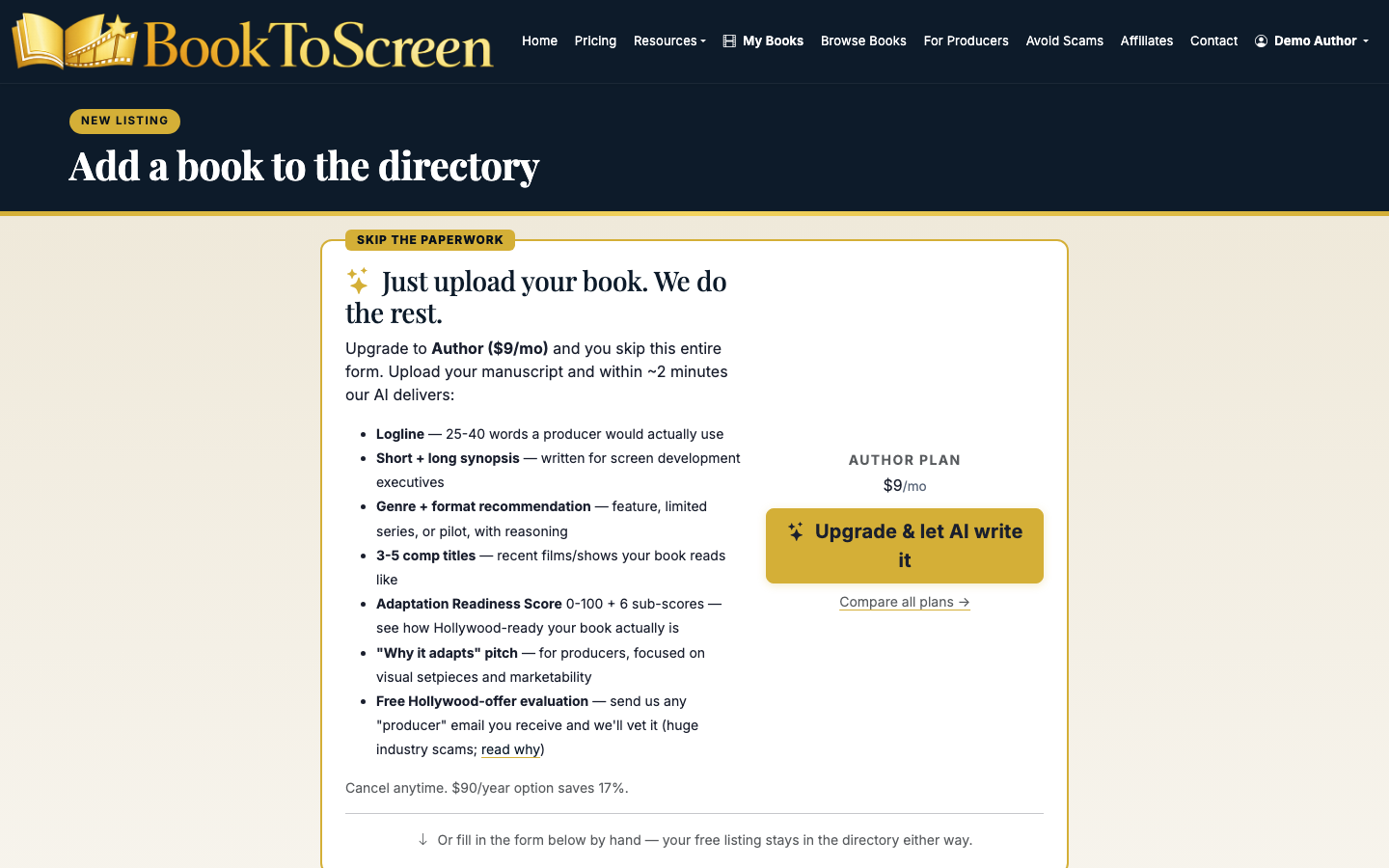
Your listing should include:
- A one-sentence logline focused on story conflict
- A short synopsis that reveals the premise, not every subplot
- Genre and tone labels that match the screen market
- 2-4 comparison titles from film or TV
- A buy link or official author/publisher page
- A clear indication that TV adaptation is of interest
4. Turn the Book Into a TV Pitch Package
A TV pitch package is not the same as a manuscript, book proposal, or query letter. It translates the book into screen-industry terms.
A useful TV adaptation package usually includes:
- Logline
- Short synopsis
- Series premise
- Pilot episode summary
- Season one arc
- Main character breakdowns
- Comparable shows
- Audience and platform fit
- Budget tier
- Rights status
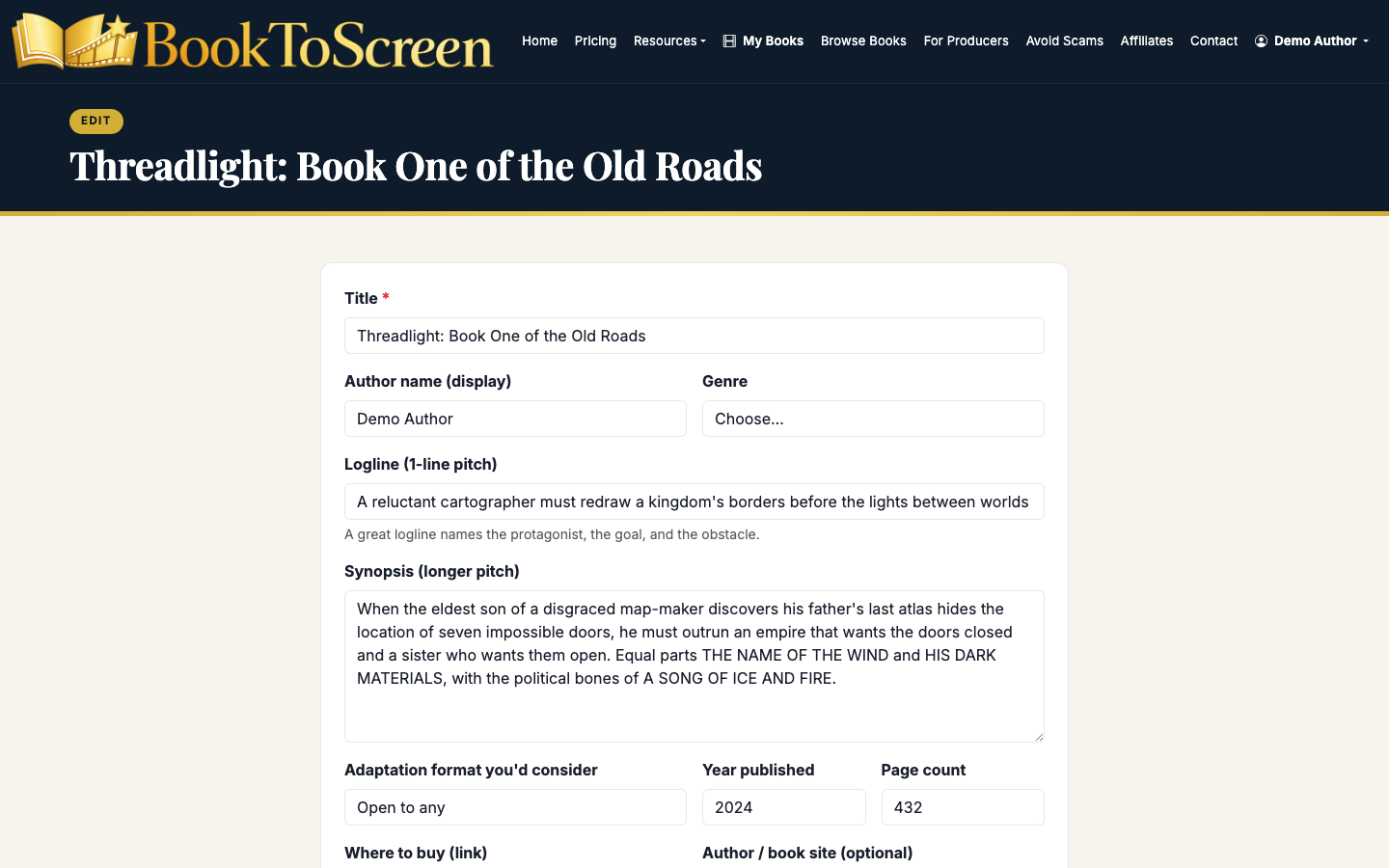
BookToScreen.pro’s paid pitch package can help generate a structured PDF with logline, synopsis, comp titles, audience positioning, budget tier, and show-pitch framing. You should still review it carefully. AI can organize and draft, but you remain responsible for the creative intent and accuracy.
For broader market positioning, you may also want to read How to Get a Book Made Into a Film, since many outreach principles overlap. When you are ready to take the package out, How to Pitch Your Book to Studios covers how those conversations are actually run.
5. Break the Book Into Episodes
A producer does not need a full season script from an author at the first conversation, but they do need confidence that the book can become television.
Start by sketching a simple episode map:
- Identify the pilot hook.
- Pick the event that ends episode one.
- Divide the book’s main turning points into 6-10 episode movements.
- Decide what changes for the protagonist in each episode.
- Add a season finale that resolves one major question while opening another.
Do not force every chapter to become an episode. Chapters are built for reading rhythm. Episodes are built around act breaks, reveals, reversals, and momentum.
6. Consider a Pilot Script or Treatment
You do not always need a pilot script to begin conversations, but it can help if your book’s voice is difficult to imagine on screen or if you are approaching smaller producers.
A pilot package may include:
- A pilot script
- A series bible
- A 1-2 page treatment
- Character descriptions
- Episode ideas
BookToScreen.pro offers an AI-assisted screenplay and TV pilot add-on, delivered as PDF plus FDX/XML export, with revision options. This can be useful for authors who want a draftable screen document before hiring a professional writer or consultant.
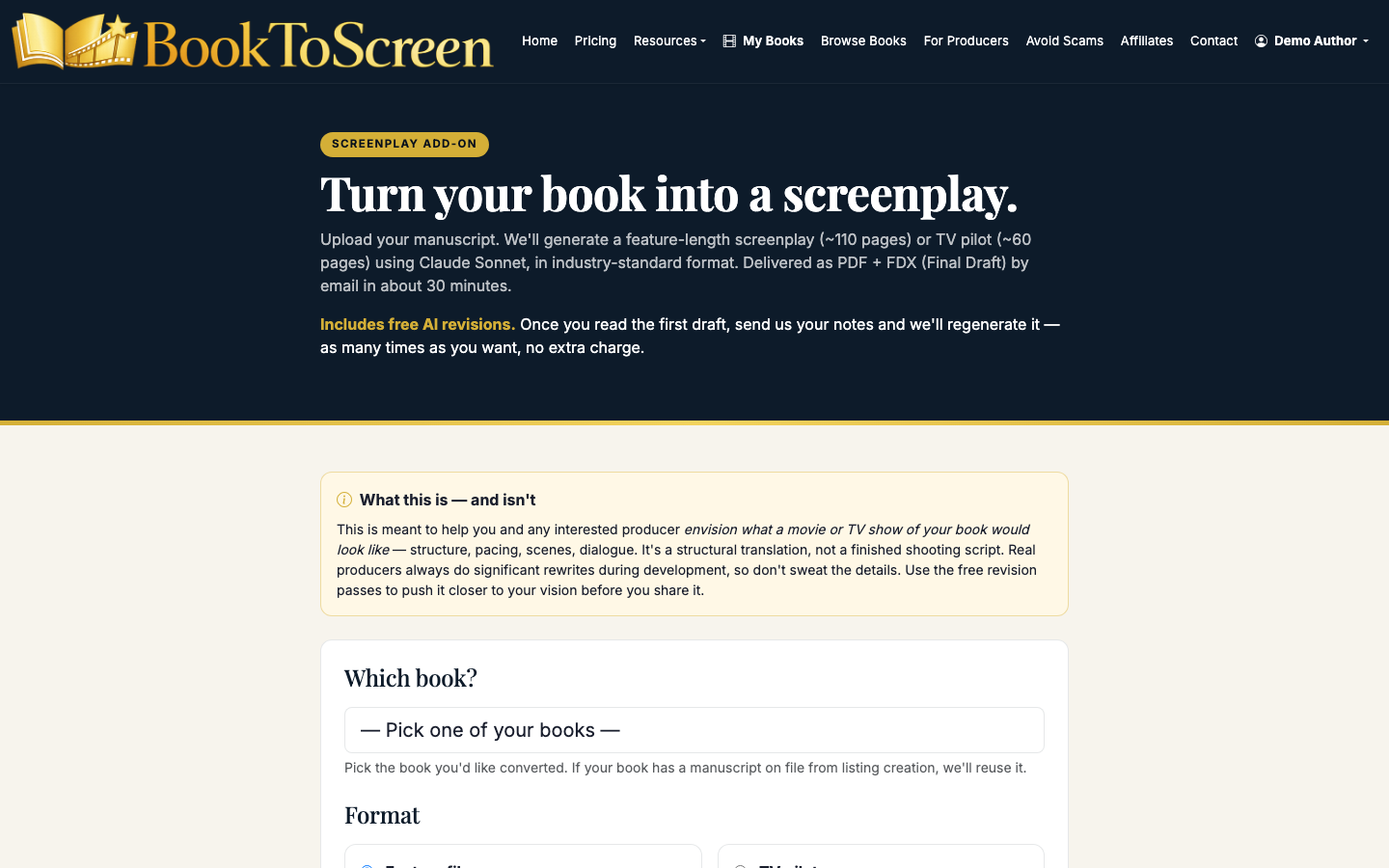
The tradeoff is control versus polish. An AI-assisted pilot can help you explore structure quickly, but serious industry submissions often need human revision from someone with TV writing experience.
7. Clarify Rights Before You Pitch
Before you pitch the book as a TV series, confirm that you actually control the rights. If you are traditionally published, review your publishing agreement. Some publishers control dramatic rights, some share them, and some leave them with the author.
You should know:
- Who controls film and TV rights
- Whether any options already exist
- Whether rights have reverted
- Whether co-authors, estates, or publishers need approval
- Whether underlying life rights are involved for memoir or true-story material
If a producer is interested, they may ask for an option agreement. That is normal, but you should have an entertainment attorney review it before signing. For more detail, see How to Sell Movie Rights to Your Book.
8. Share Materials With Producers Carefully
Once your listing and pitch materials are ready, the goal is targeted exposure, not mass emailing. Producers and scouts respond better when the book clearly fits their taste, budget range, and previous work.
On BookToScreen.pro, producers can browse the directory for free and request screenplay access through approval-gated tokens, so authors do not have to send scripts or pilots blindly.
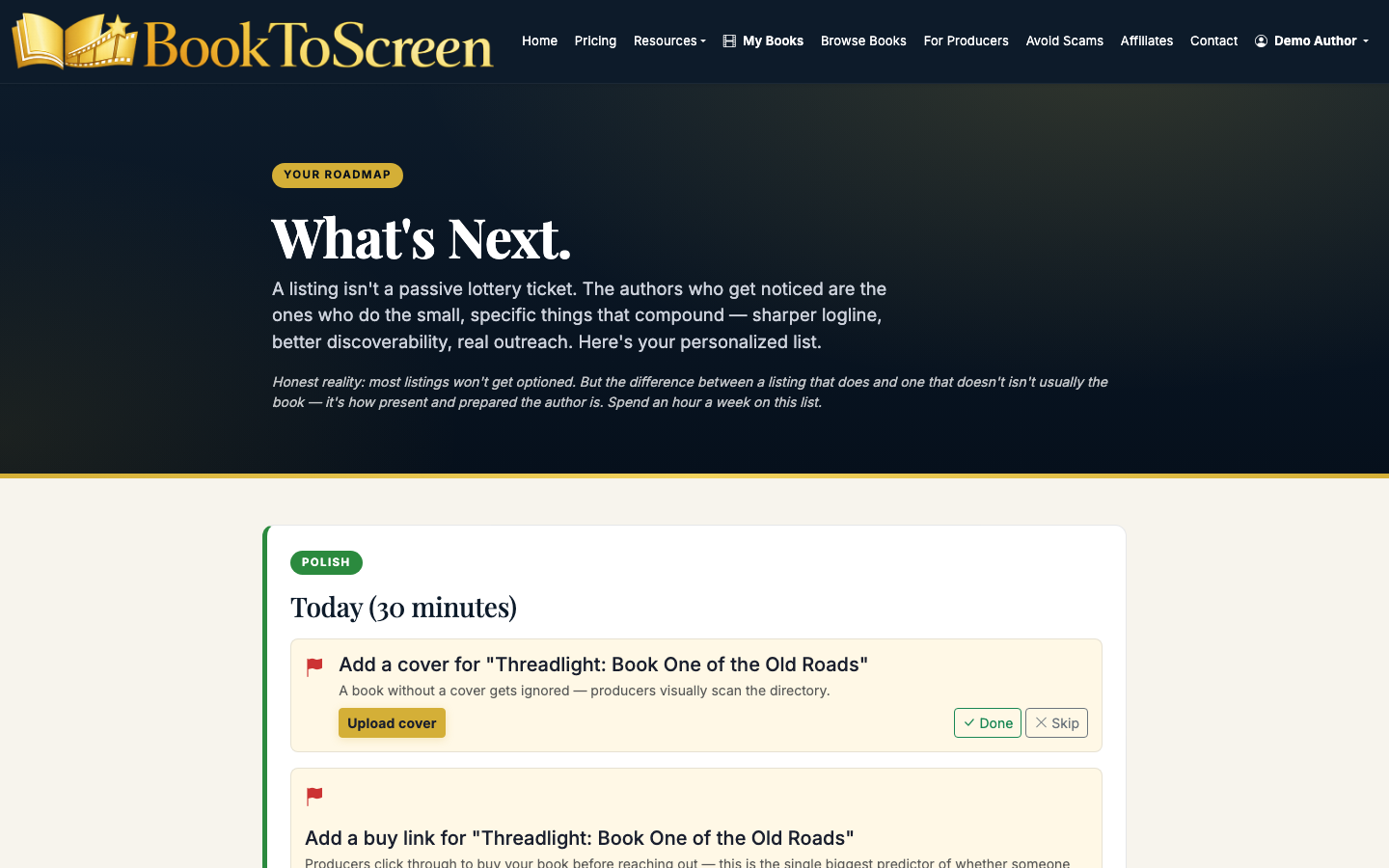
You can also use the dashboard’s next-step guidance for outreach templates, comp research, and pitching tasks.
9. Watch for Upfront-Fee Scams
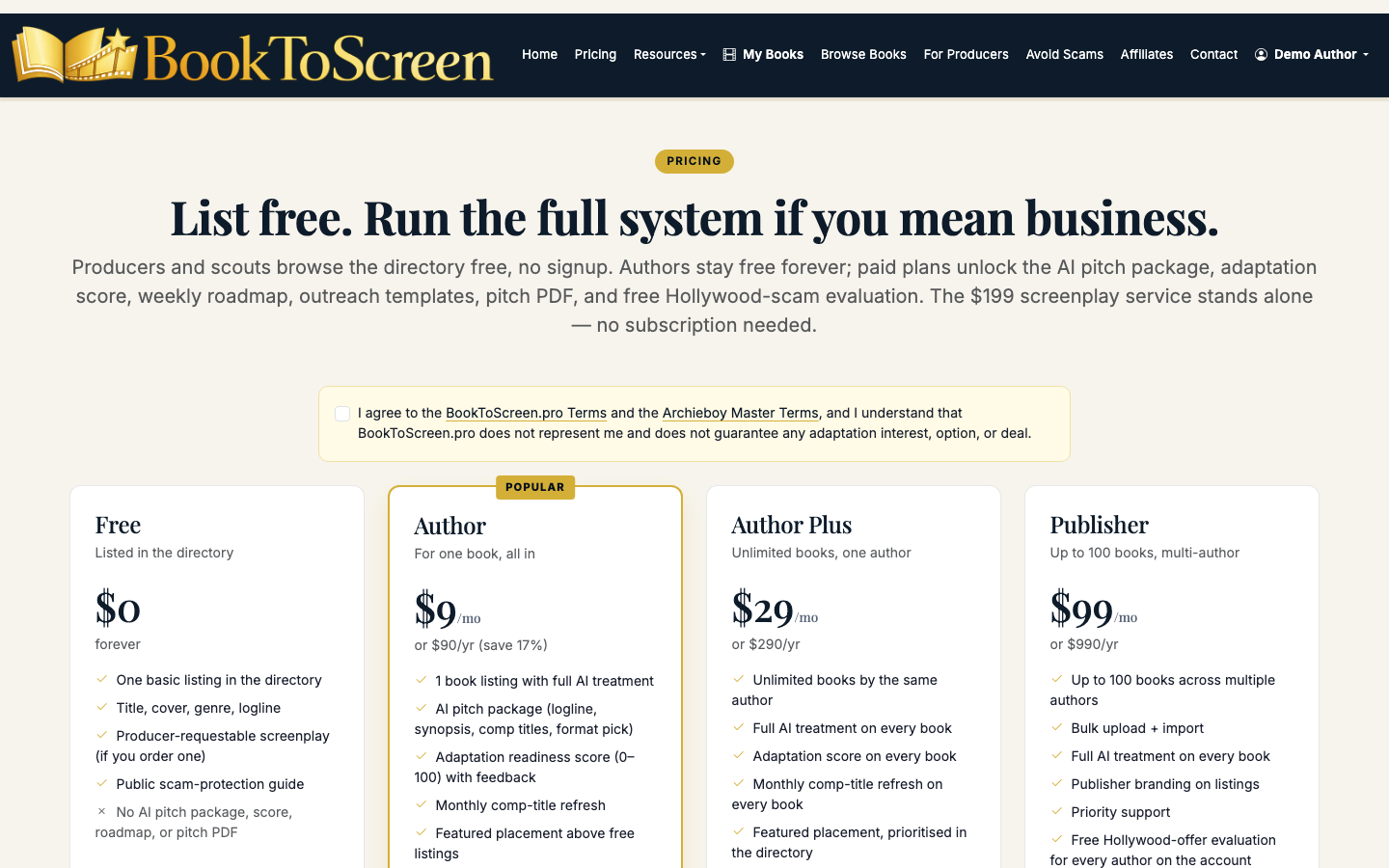
Interest from Hollywood is exciting, and that is exactly why authors get targeted. Be careful with anyone who guarantees a Netflix deal, asks for large upfront marketing fees, or claims you must buy their package to be shown to producers.
BookToScreen.pro is not an agent or rights representative and does not guarantee representation, options, or sales. Its role is to help authors present adaptation-ready materials and make books easier to discover.
10. Improve the Pitch Based on Feedback
Most books do not sell to TV from one pitch. Treat the process as iterative. If people pass, look for patterns in the feedback.
Common issues include:
- The premise is too internal for television
- The budget is too high for the current market
- The comps are unrealistic or too broad
- The pilot does not create enough urgency
- The rights position is unclear
- The author pitch focuses on the book’s publication history instead of screen potential
Update your public listing, pitch package, comps, and pilot materials as you learn. A clearer TV pitch is not always a louder one. Often, it is shorter, more specific, and easier for the right producer to understand.