What Studios Actually Need Before They Read
Most studios do not accept unsolicited material directly from authors. That means your practical goal is usually to make the book easy for producers, scouts, lit managers, entertainment attorneys, or production companies to evaluate. If someone with access likes the project, they can help move it toward the right buyer.
A strong pitch should answer six questions fast:
- What is the story in one or two sentences?
- Why is it filmable or series-friendly?
- Who is the audience?
- What successful titles does it sit near?
- Is the tone clear?
- Are the screen rights available?
Step 1: Create a Public Book Listing
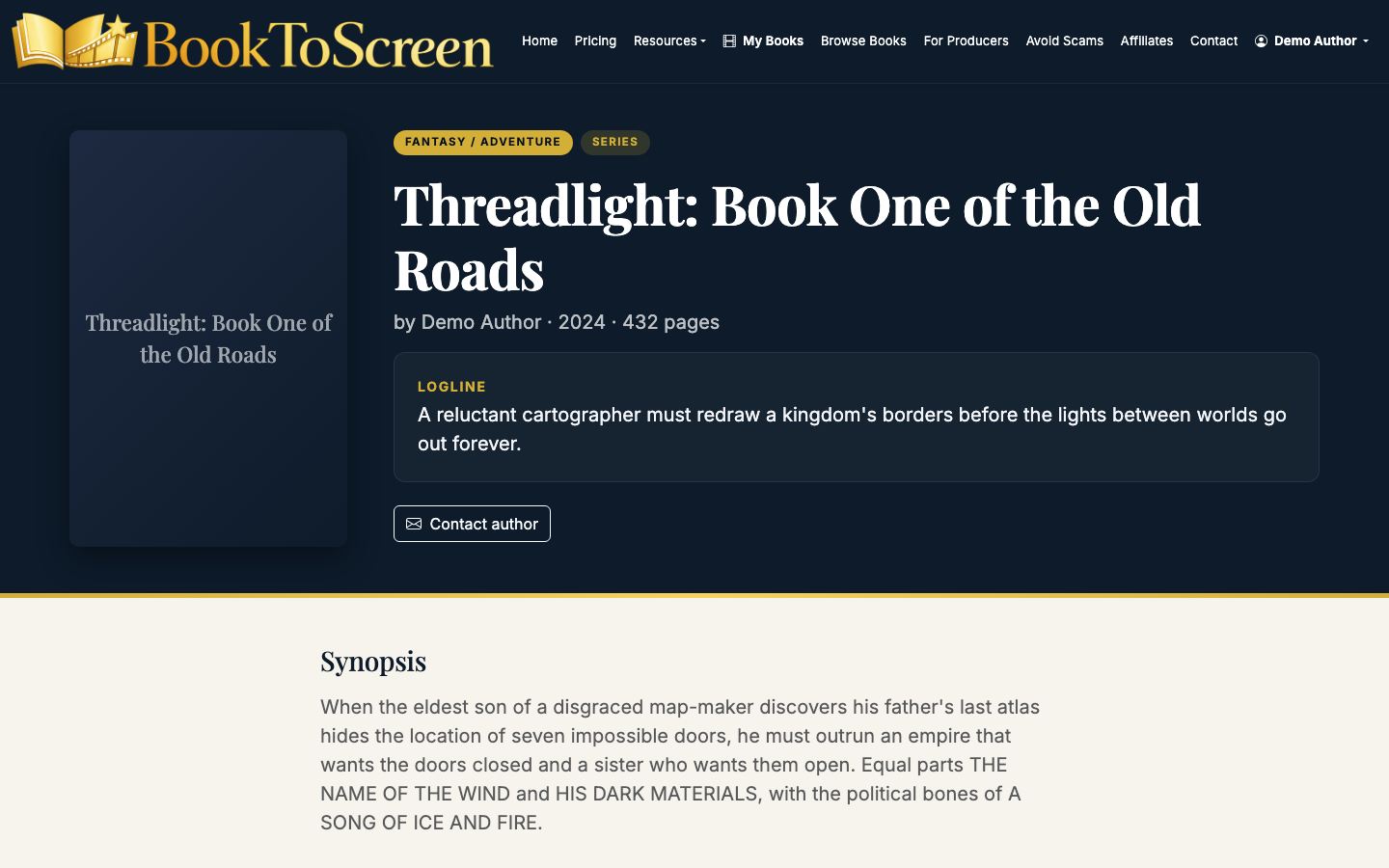
Start by putting the core adaptation information in one place. On BookToScreen.pro, your public listing gives producers and scouts a quick view of your cover, logline, synopsis, genre, format preference, comp titles, and buy link.
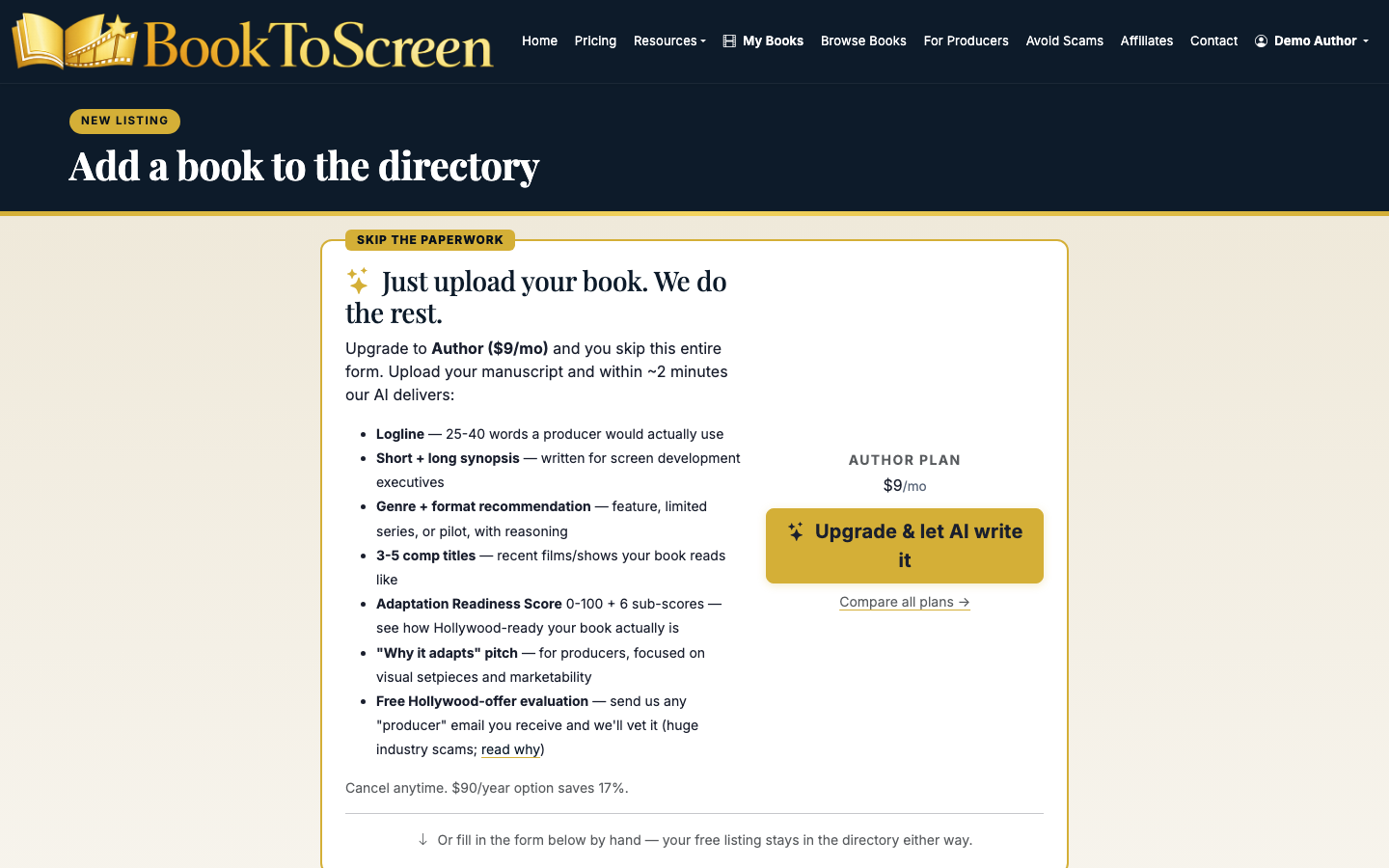
Keep the listing focused on the screen opportunity, not every detail from the book. A producer does not need your full back-cover copy, review history, or chapter-by-chapter structure on first pass. They need enough to decide whether the premise is worth a closer look.
Use:
- A one-sentence logline under 40 words
- A synopsis between 150 and 300 words
- Two to four comp titles
- A clear format preference, such as feature film, limited series, or TV pilot
- A link where the book can be bought or reviewed
If you are still unsure whether the story should become a film or series, read How to Adapt a Book Into a Screenplay before you frame the pitch.
Step 2: Tighten the Logline Around Screen Conflict
Your logline is the most important part of the pitch. It should not summarize the entire book. It should frame the main character, the central conflict, and the stakes in a way that sounds visual and dramatic.
A useful structure is:
- When [inciting event] happens, [specific protagonist] must [difficult goal] before [stakes or consequence].
For example, instead of:
- A moving family drama about grief, secrets, and second chances.
Try:
- After discovering her late father staged his own disappearance, a widowed journalist must return to the town she fled and expose a decades-old crime before her family becomes the next target.
That second version gives a producer something to picture. It suggests genre, momentum, stakes, and a screenable journey.
Step 3: Generate a Pitch Package
Once your listing has the basics, use the pitch-package builder to turn the raw book details into a more complete screen-facing presentation. BookToScreen.pro can generate a PDF package with a logline, synopsis, comp titles, audience notes, budget tier, and show or film pitch angle.
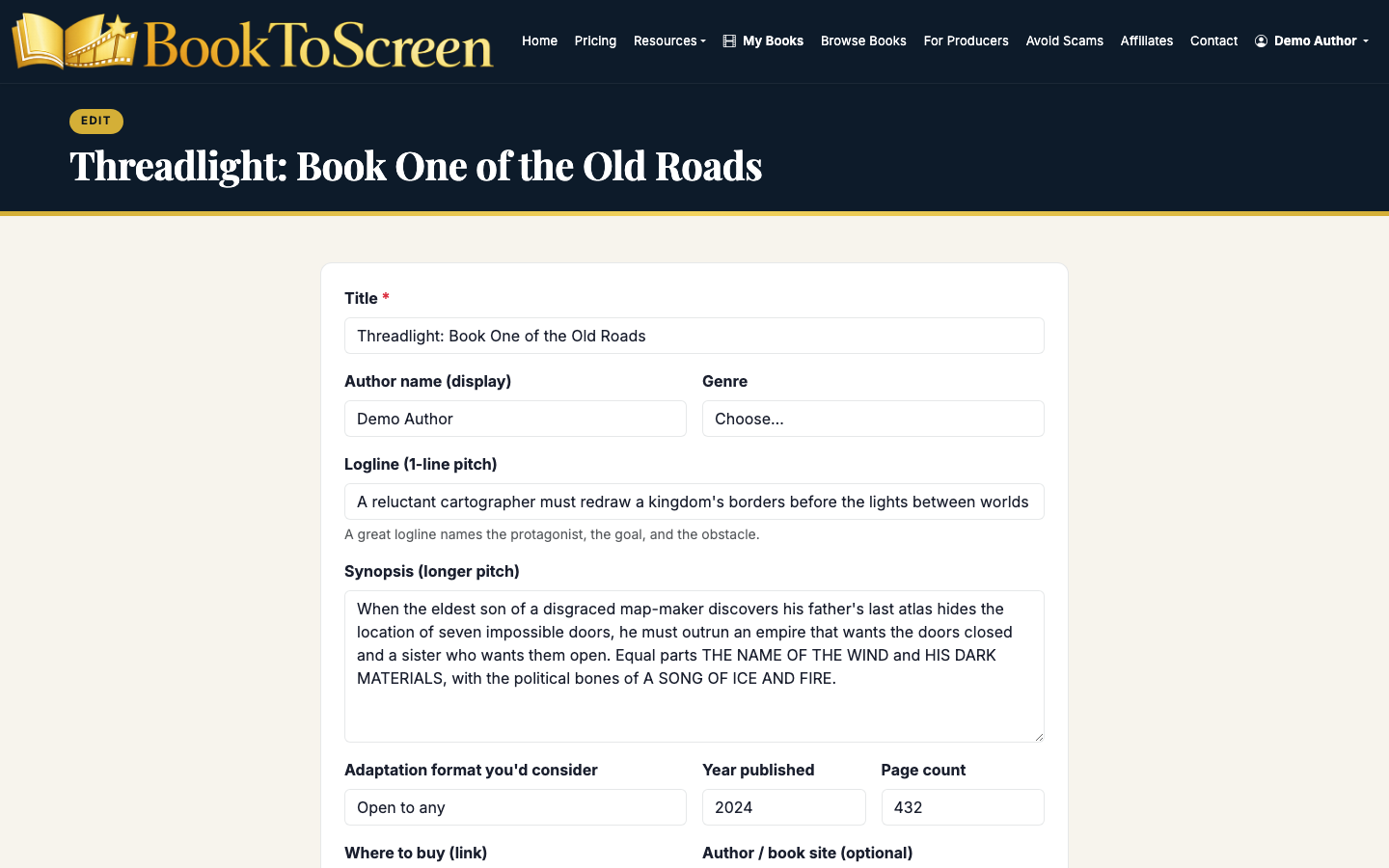
The pitch package is not meant to replace a manager, agent, or entertainment attorney. It gives you a cleaner starting point for outreach and helps you avoid sending a vague “please consider my book” email.
Review every generated section before using it. Fix anything that overstates the book, misreads the tone, or chooses comps that are too large to be useful. “The next Game of Thrones” is rarely credible. A tighter comparison such as “tone of Mare of Easttown with the family-secret engine of Sharp Objects” is usually more helpful.
Step 4: Check Adaptation Readiness
Before contacting anyone, look at the adaptation-readiness breakdown. A book can be excellent on the page and still need work as a screen pitch. Common weaknesses include a passive protagonist, unclear visual stakes, too many timelines, a plot that depends heavily on interior monologue, or a premise that sounds expensive without a clear audience.
Use the score as a diagnostic, not a verdict. A low score does not mean the book is bad. It means the screen pitch needs more framing.
Focus especially on:
- Hook clarity
- Character drive
- Visual conflict
- Market positioning
- Budget plausibility
- Series or feature fit
If your score exposes a major format question, compare your options with How to Get a Book Made Into a Film.
Step 5: Make the Book Discoverable to Producers
After your listing and pitch package are ready, publish the book in the public directory. Producers, scouts, and lit managers can browse listings without paying, which lowers friction for discovery.
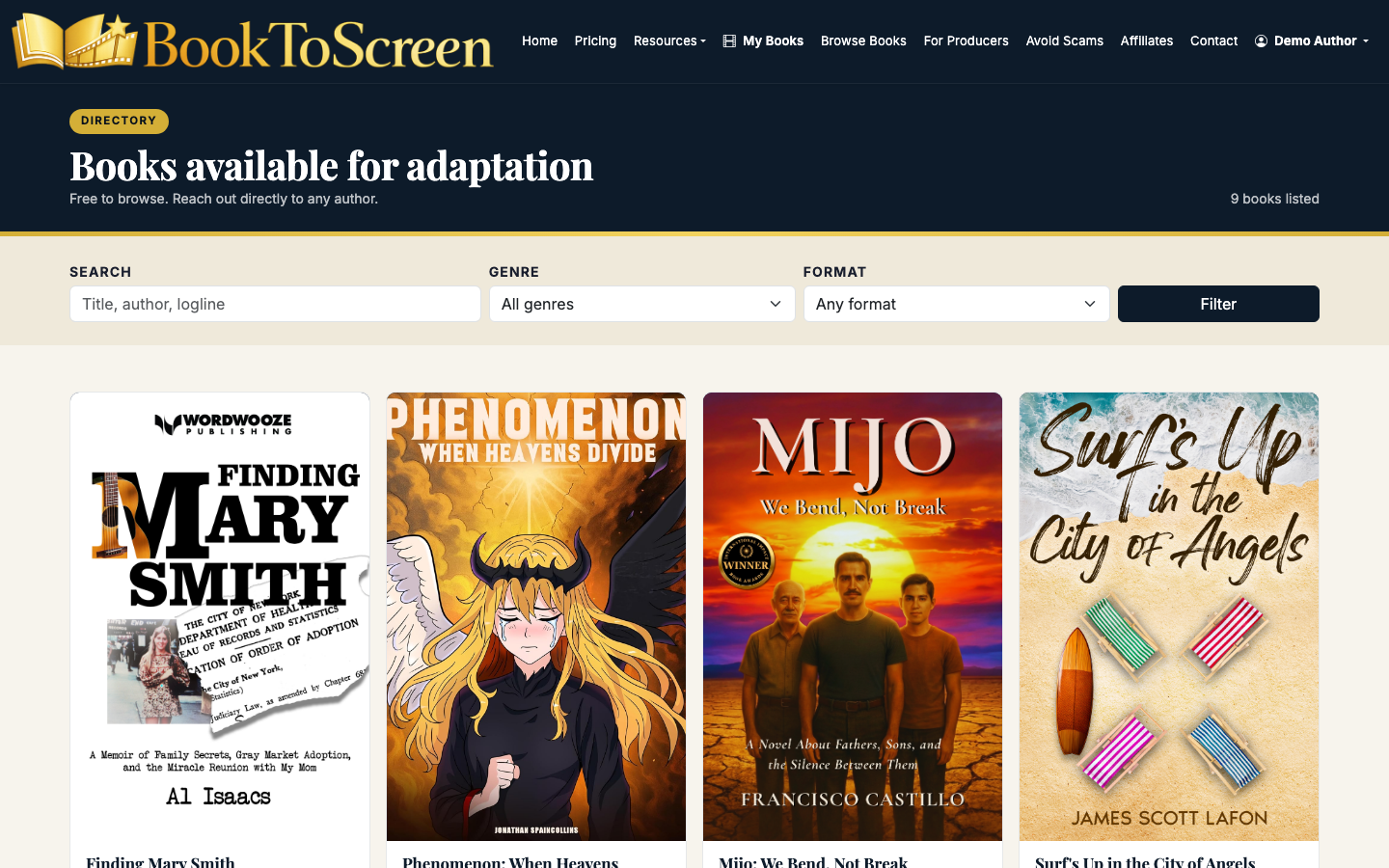
Your public page should make the contact path clear while still keeping control in your hands. A good listing gives enough information to create interest but does not require you to post private contracts, unpublished manuscripts, or sensitive rights documents.
Step 6: Use the What’s-Next Dashboard for Outreach
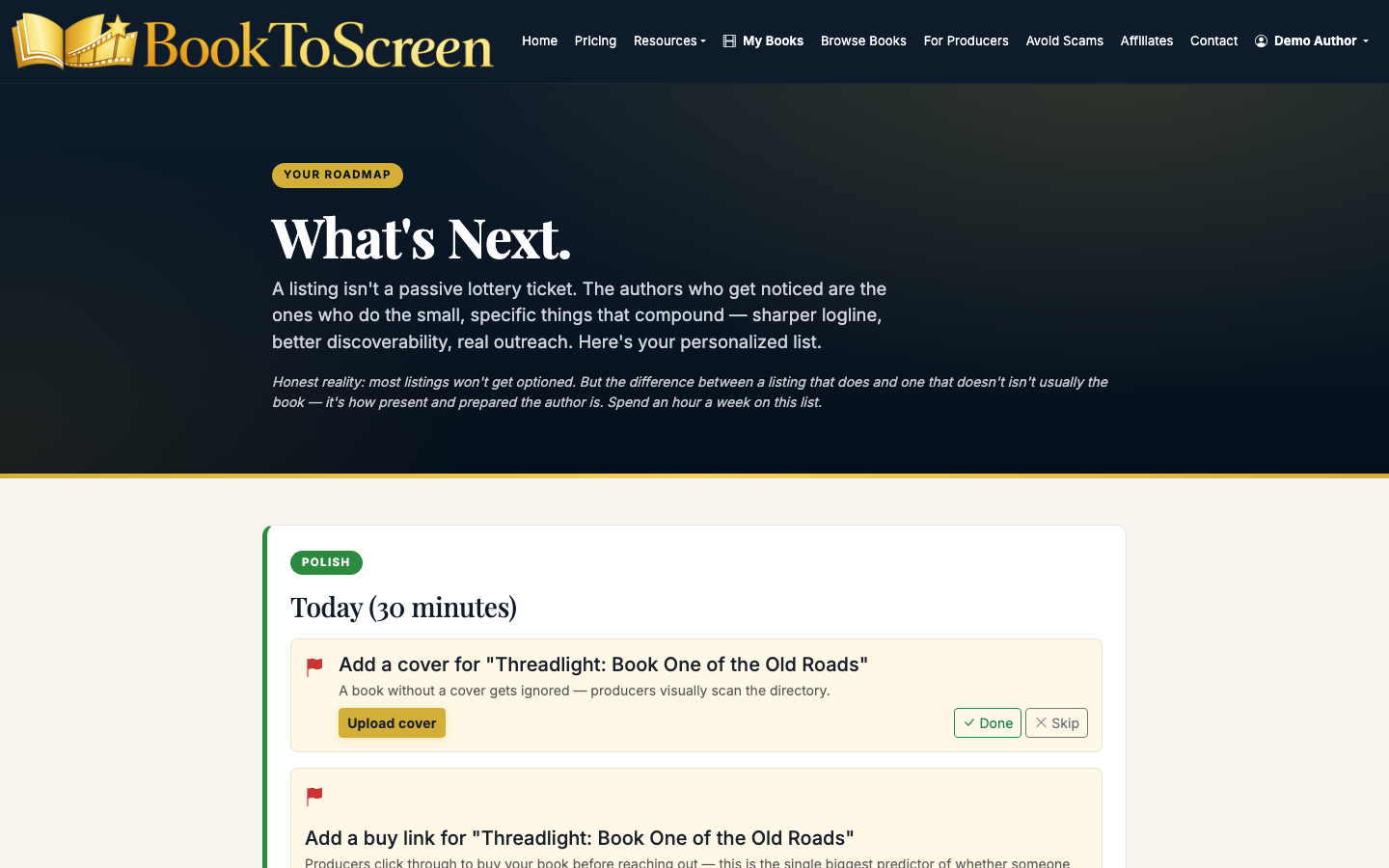
The next step is targeted outreach. BookToScreen.pro’s what’s-next dashboard gives you pitching guidance, outreach templates, and comp-research prompts so you can approach the right people with the right angle.
A practical outreach email should be short:
- Subject line: book title plus genre or adaptation angle
- First sentence: why you are contacting this person specifically
- One-sentence logline
- One credibility signal
- Link to the public book page or pitch package
- Polite close with no pressure
Do not attach a manuscript, screenplay, or large PDF unless requested. Many recipients will not open unsolicited attachments. A clean link is easier to review and safer for both sides.
Step 7: Decide Whether You Need a Screenplay or Pilot
You do not always need a screenplay to pitch a book. In many cases, producers prefer to evaluate the underlying IP first. But a screenplay or pilot can help when the book’s screen version is hard to imagine, the structure needs proof, or the project is aimed at lower-budget independent producers.
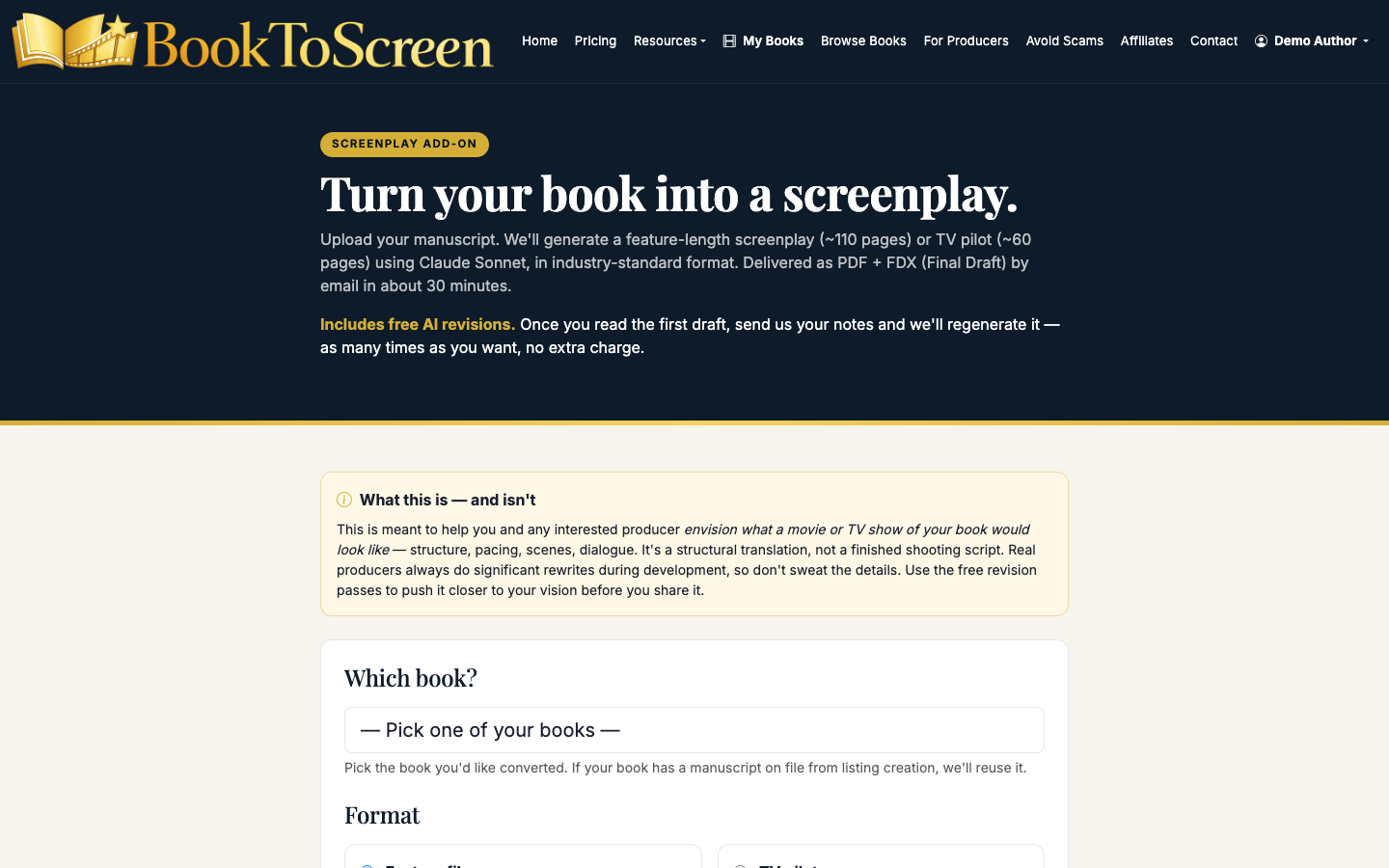
BookToScreen.pro offers an AI-assisted screenplay or TV pilot add-on with revisions and PDF plus FDX/XML export. Producers can request screenplay access through approval-gated tokens, so you can control who sees it.
If your main goal is selling or optioning rights, understand the business side before sharing scripts broadly. See How to Sell Movie Rights to Your Book for the rights path.
Step 8: Watch for Fake Studio Offers
Authors searching for studio access are often targeted by companies that imply they can get a book in front of Netflix, Amazon, or major studios for a fee. Some services are legitimate marketing vendors. Others use vague language, pressure tactics, or fake urgency.
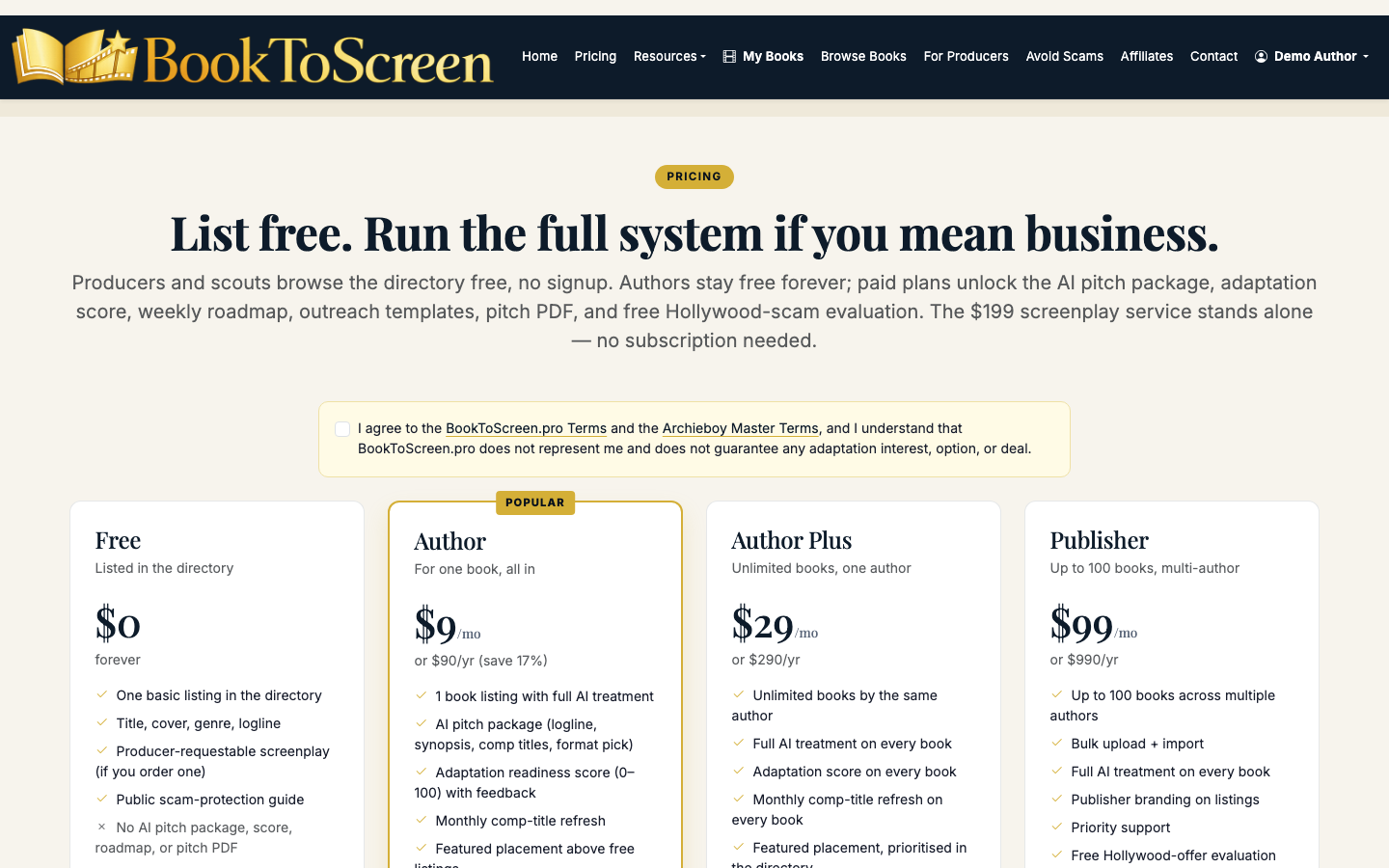
Before paying anyone, check the offer carefully. BookToScreen.pro includes a free offer-check tool that can flag common scam-risk patterns, including upfront-fee promises, unverifiable producer claims, and language that suggests guaranteed exposure.
A Realistic Pitching Workflow
A practical workflow looks like this:
- Prepare your public listing.
- Refine the logline and synopsis for screen appeal.
- Generate and review a pitch package.
- Check adaptation readiness.
- Publish the listing in the directory.
- Research producers and managers who fit your genre.
- Send short, targeted outreach.
- Track responses and protect yourself from questionable offers.
That process will not guarantee a studio deal. Nothing ethical can. But it does make your book easier to evaluate, easier to share, and easier to take seriously when the right producer, scout, or manager is looking for material.