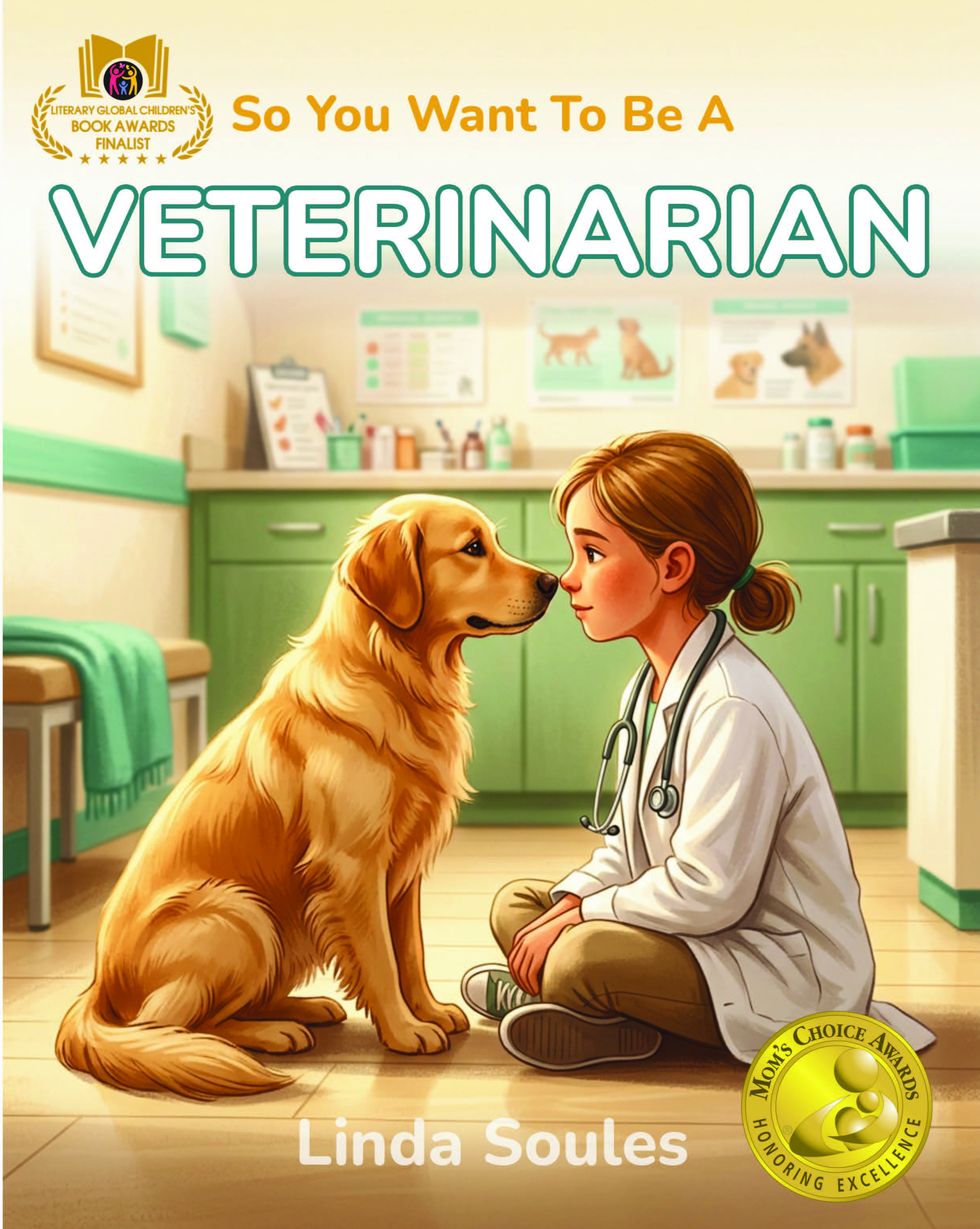
So You Want To Be A Veterinarian
by Linda Soules · 27 pages
A warm, candid guide invites curious kids to imagine becoming a veterinarian, walking them through the job's tools, joys, heartbreaks and surprises to show what it takes to speak for patients who cannot speak for themselves.
Synopsis
AI Pitch Package
For producers, scouts & managers
Logline
A shadowing-obsessed ten-year-old spends a season riding along with a small-town vet team, learning that every patient who can't speak needs a doctor who listens, and that the job's joys come packaged with its heartbreaks.
Short synopsis
Based on Linda Soules's career guide, this kids' series follows a curious ten-year-old who shadows a mixed-practice vet team for a season. The book has no characters or plot, so the show builds a framing story around its real content. Each episode takes one idea from the book: reading an animal's posture, eyes and ears like a detective; treating an owner's hunch as clinical data; working on farms, in zoos and in the ocean; the humor of escaping hamsters and parrots yelling for help. The series is also honest about costs, including euthanasia, unaffordable care and burnout. Its spine is the book's closing promise that a vet is the one who shows up for animals who cannot ask for help.
Extended synopsis
Why it adapts
A 27-page guide has no throughline to sustain a feature, but its modular chapters (species, settings, a day in the life, the team, the hard parts) map directly onto standalone episodes. An ongoing kids' series also fits the author's 196-title franchise, which could extend the show into other careers. A documentary format would be a less natural fit for the core 5-9 audience than a scripted or hybrid episodic show.
Primary: ages 5-9, with strong co-viewing from parents and educators who want age-appropriate career and empathy content. Secondary: animal-loving tweens and the All Creatures Great and Small / Dr. Pol adult audience as a family-viewing crossover. These viewers also watch Bluey, Wild Kratts, Doc McStuffins, Ada Twist, Scientist and Octonauts.
Adaptation Readiness Score
62 / 100
- The 'doctor, detective and translator' premise gives a clear, visual engine: each episode can be a diagnostic mystery where the vet reads posture, eyes and habits to solve what the animal can't say.
- The setting variety (clinic, farm, zoo, wild, ocean) and the 7:30 AM to 5:00 PM sample day supply a built-in episodic structure, with a natural ensemble in the technicians, specialists and managers.
- The candid emotional range, from escaping hamsters and shouting parrots to euthanasia and affordability dilemmas, offers tonal contrast that can give a family or kids' series real heart. The Herriot, Cust and Grandin biographies add ready-made spin-off or segment material.
- As a 27-page career guide, it has no protagonist, no dialogue and no ongoing story arc. A series would need to be built from scratch around its themes, so this is a franchise concept more than a finished narrative.
- The 'you' second-person address and the informational sections (glossary, quiz, resources, prep tips) don't translate directly to scripted drama. The format needs a decision: scripted kid-vet series, hosted docu-style show, or hybrid.
- The emotional peaks, especially euthanasia and financial hardship, are handled in summary and will need age-appropriate dramatization. The AI-assisted illustrations also complicate visual-IP and rights questions for adaptation.
- So You Want To Be An Astronaut by Linda Soules
- The Anniversary He Left by Cy Summers
- The Anniversary He Left by Cy Summers
- Snow Angels by Robyn Stevens