Logline
A first-time solo cruiser navigates confusing deck plans, punitive single supplements, and the unspoken etiquette of shipboard life to turn anxious isolation into confident, self-sufficient travel.
Short synopsis
A wry, practical guide to solo cruising reframes the ship as a 'floating village' where nobody is watching the lone diner as closely as they fear. Structured around the lifecycle of booking and taking a cruise alone, it walks readers through choosing ocean liners versus river boats, decoding cabin types and deck plans, and outmaneuvering the industry's biggest villain: the single supplement fee. Satirical asides on towel animals, lanyards, and quiz nights keep the tone light while delivering real strategy on timing, pricing, and social pacing. The payoff isn't a plot resolution but a mindset shift — from nervous first-timer to self-possessed traveler who treats solitude at sea as a reward, not a deficiency.
Extended synopsis
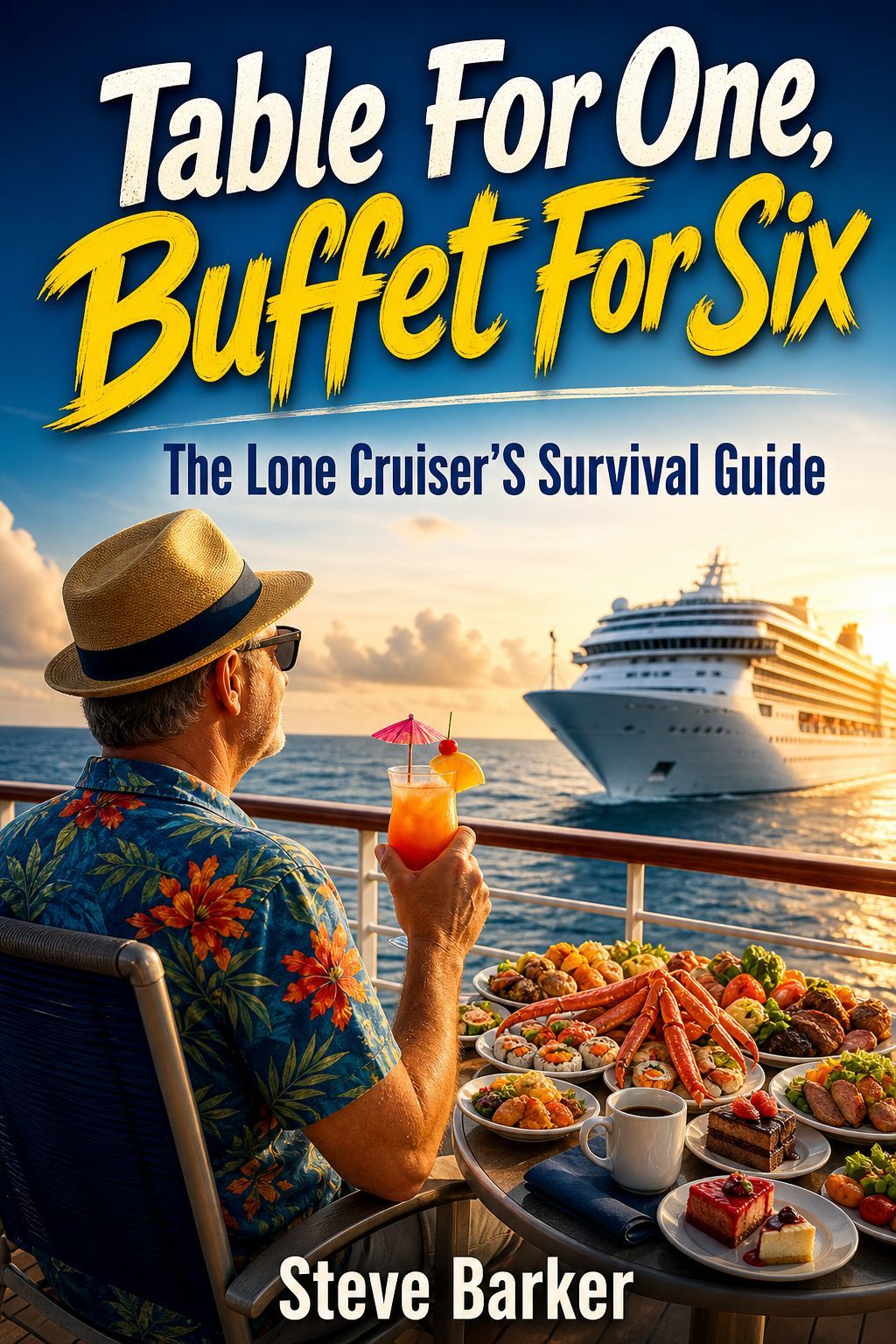
"Table for One, Buffet for Six" is a humor-forward nonfiction guidebook that treats solo cruising as an entire micro-society to be studied, decoded, and ultimately mastered. It opens by dismantling the core anxiety of solo travel — the fear of being watched and judged — by pointing out that everyone else on board is far too preoccupied with their own balcony envy, drink packages, and buffet strategy to notice a lone diner. This reframing sets the tone: cruising as a temporary floating village with its own customs, hierarchies, and in-jokes.
The middle of the book functions as a comparative shopping guide, weighing the anonymous, resort-scale bustle of ocean liners against the fast-familiarity of smaller river boats, matched to different traveler temperaments — shy, sociable, or scenery-obsessed. Running through it is a recurring comic villain: the single supplement, personified as an adversarial pricing scheme designed to punish travelers for arriving alone. Chapters on shoulder-season timing, deal-spotting, and cancellation fine print become the guide's 'obstacles to overcome' in lieu of plot.
The back half escalates into the book's closest thing to a climax: an extended, almost forensic breakdown of cabin types and deck plans, urging readers to approach cruise line brochures with the skepticism of a fraud investigator rather than a starry-eyed vacationer. There's no traditional resolution — instead, the book closes on reassurance and earned competence. The reader who started anxious and unsure exits equipped to book confidently, travel independently, and enjoy solitude as a civilized luxury rather than a social failure.
As source material, the book has no plot, no antagonist, and no throughline character — it's a structured body of practical, funny, specific advice. Its adaptation value lies entirely in its voice, its comic framing devices (the single supplement as villain; the ship as village), and its real-world utility as a format engine for a hosted or ensemble-driven documentary series about the growing solo-travel and cruise industries.
Why it adapts
The book's real asset isn't plot — it's a fully-formed comic worldview and a killer format engine. 'The single supplement as villain' and 'the ship as floating village' are the kind of reframing devices that translate directly into recurring bits, graphics, and a hosting persona; each chapter (ocean vs. river, cabin detective work, dining alone, deck-plan decoding) is already structured like a self-contained episode with its own visual setpiece — towel-animal competitions, buffet-queue anthropology, the reveal of a 'hidden' inside cabin nobody warned you about. Cruise ships themselves are a producer's dream location: contained, visually spectacular, logistically pre-built for a crew, and full of built-in supporting characters (crew, repeat cruisers, solo-traveler communities) without needing to cast or scout.
The hook for a poster or thumbnail is strong and specific: a single traveler, tray in hand, navigating a buffet built for groups — instantly legible, funny, and a little poignant. Paired with a host or rotating cast of real solo travelers actually booking and taking these trips on camera, the series can deliver the book's practical value (real advice on pricing, timing, cabin selection) while getting the visual variety and emotional throughline (isolation to confidence) that pure advice content usually lacks. It's a format, not a story — but it's a marketable, low-cost-to-produce format with a pre-tested comic voice and an audience that already exists in droves.
Format recommendation
Documentary Series
The material has no narrative spine, protagonist, or dramatic arc to sustain a feature or scripted series — it's a chapter-by-chapter practical guide, which maps naturally onto an episodic docuseries structure (one theme per episode: booking, cabin types, ocean vs. river, dining, the single supplement). A host-driven or ensemble-of-real-solo-travelers format, shot aboard actual cruises, would let the book's comic framing devices become visual bits while delivering the same practical value as the source text.
Comp titles
Somebody Feed Phil (Netflix)
Same warm, funny, first-person travel-host voice turning practical curiosity (where to eat, how to navigate a new place) into low-stakes, binge-friendly episodes.
Jane McDonald: Cruising (Channel 5)
A real, long-running docuseries built entirely around cruise travel — proof there's an established audience and format for cruise-focused nonfiction TV.
How To with John Wilson (HBO)
Demonstrates how a dry, deadpan breakdown of mundane systems and social rules (here: towel animals, lanyards, deck plans) can be stylized into distinctive, quotable television.
The Real Love Boat (2022)
Shows a cruise ship as a self-contained, visually rich production setting with built-in social dynamics — the same 'floating village' premise the book leans on.
Down to Earth with Zac Efron (Netflix)
A model for turning practical/educational travel content into an accessible, likable, structured docuseries rather than a dry instructional format.
Audience
Adults 35-65, frequent and aspirational travelers, disproportionately solo travelers, empty-nesters, recently divorced/widowed, and retirees; viewers of Somebody Feed Phil, Jane McDonald: Cruising, and Down to Earth with Zac Efron, plus the built-in audience of cruise-line loyalists and travel-forum communities.
Tone
wry
reassuring
observational
practical
self-deprecating
cozy