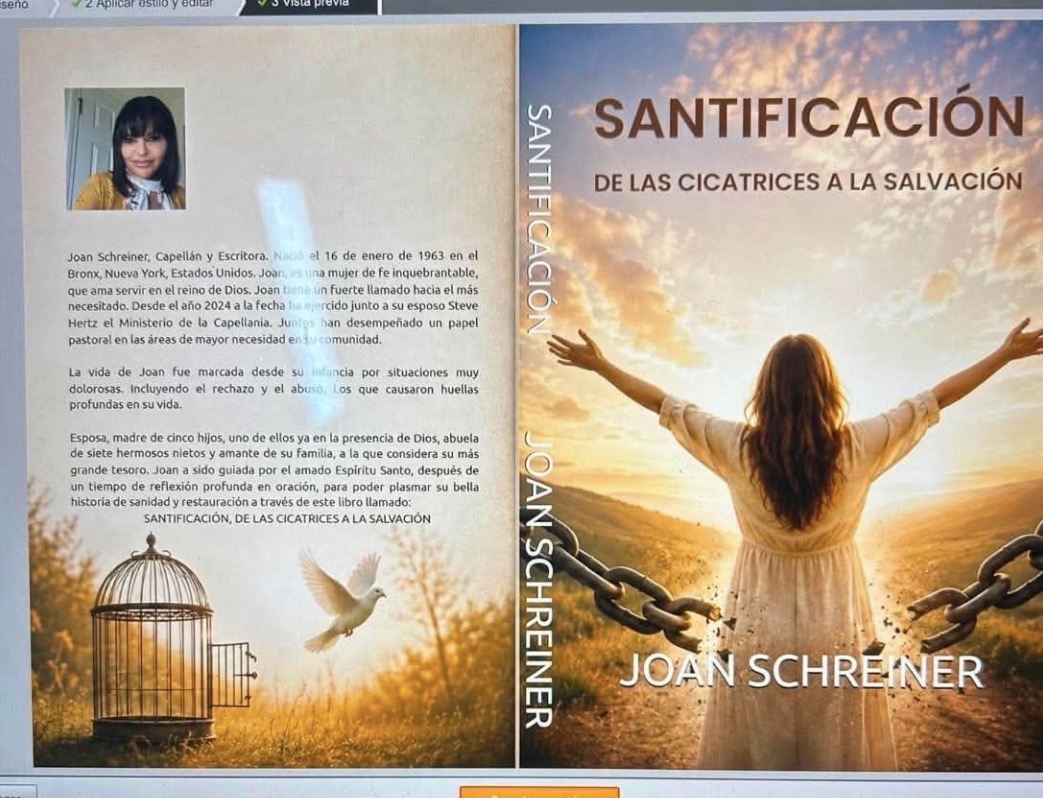
SANTIFICATION: FROM SCARS TO SALVATION cover
Biography / Memoir Limited Series

SANTIFICATION: FROM SCARS TO SALVATION

by JOAN SCHREINER · 210 pages

Logline

Joan Schreiner, a Bronx-born Puerto Rican woman scarred by childhood rejection, sexual abuse, addiction and two failed marriages, fights to heal and forgive through Christian faith, hoping to turn her scars into testimony for other survivor

Synopsis

Joan Schreiner opens with a childhood in the Bronx and Cayey and Caguas, Puerto Rico. Her devout grandmother is her anchor, but her mother is cold and harsh, favors her brothers and refuses to believe her when she reports abuse. After a stepfather begins sexually abusing her at eleven, her mother blames her. The abuse continues until his sudden death when she is fifteen. She self-harms, is bullied, and loses chances such as a beauty contest and dance lessons to his control. She excels at school, graduating near the top of her Bronx class, but becomes pregnant young. Adulthood brings more damage. A first marriage ends in divorce amid her cocaine and alcohol use. She enters a second relationship with a controlling, drug-involved partner, nearly becomes a drug courier, and is spared at an airport by what she later reads as divine protection. Her son dies at birth. She builds a business in Puerto Rico, but her second husband, who has bipolar disorder, loses his mind and their fortune. A church worker leads the family to Christ. Their home stays violent, a man drugs and assaults her, and her church community and family cast her out over false accusations. She flees to Massachusetts and works in addiction treatment. Her children rejoin her, but she suffers alcoholism and an overdose that puts her in intensive care. She also faces spinal surgeries, narcotic dependence, paralysis and a car crash. She reports a miraculous healing from cancer at 33 and later recoveries from sepsis and paralysis. She also lives with a heavy loss: a son cut her off after she reported his partner to child protective services, and she has barely seen her grandchildren. The climax is spiritual rather than dramatic. She asks forgiveness from her children, forgives her mother after learning of her mother's own abuse, and forgives betrayers. She meets her current husband, Steve Hertz, at fifty and marries within a year. Together they serve as chaplains. She ends unreconciled with one son but at peace, declaring her scars have become testimony and writing the book as ministry to the wounded.

AI Pitch Package

For producers, scouts & managers

Logline

Blamed by her mother for her stepfather's abuse, Bronx-born Joan Schreiner spends decades running through addiction, ruinous marriages and bodily collapse, until survival demands the one thing she can't imagine: forgiving the people who broke her.

Short synopsis

Joan Schreiner grows up between the Bronx and Puerto Rico, anchored by a devout grandmother and crushed by a mother who favors her brothers and refuses to believe her when her stepfather begins abusing her at eleven. The abuse ends only with his death when she is fifteen. She graduates near the top of her class, then spends adulthood in cocaine and alcohol use, a failed first marriage, a controlling partner who nearly makes her a drug courier, a stillborn son, and a second husband whose bipolar breakdown destroys their business and fortune. Faith arrives, but her church and family cast her out. In Massachusetts she faces overdose, spinal surgeries and paralysis. Healing finally means forgiveness, including of her mother, though one son stays estranged.

Extended synopsis
Joan grows up split between the Bronx and the towns of Cayey and Caguas in Puerto Rico. Her grandmother's faith is the one safe place in her life. Her mother is cold and punishing, favors Joan's brothers, and does not believe her when Joan reports that her stepfather is sexually abusing her. She is eleven. When she tells, her mother blames her. Joan self-harms, is bullied, and loses a beauty contest and dance lessons to her stepfather's control. She still graduates near the top of her Bronx class. The abuse stops only when he dies suddenly when she is fifteen, and she becomes pregnant not long after. Adulthood repeats the damage. A first marriage ends amid her cocaine and alcohol use. She takes up with a controlling, drug-involved partner and is nearly drawn into carrying drugs, until an airport encounter she later reads as divine protection spares her. Her son dies at birth. She rebuilds, starts a business in Puerto Rico and prospers, but her second husband, who has bipolar disorder, unravels and takes their fortune with him. A church worker brings the family to Christ, but the home stays violent. After a man drugs and assaults her, her church community and her family turn on her over false accusations and cast her out. She flees to Massachusetts and works in addiction treatment while fighting her own addiction. Her children rejoin her, but alcoholism lands her in intensive care after an overdose. A run of spinal surgeries, narcotic dependence, paralysis and a car crash follows. Joan reports being healed of cancer at 33 and recovering later from sepsis and paralysis. She holds these as miracles, and the series can tell them from her point of view. The cost is still visible: a son cut her off after she reported his partner to child protective services, and she has barely seen her grandchildren. The final movement is moral rather than plot-driven. Joan asks her own children for forgiveness. She forgives betrayers. She forgives her mother after learning that her mother was abused too, which reframes the central relationship of the story. At fifty she meets Steve Hertz, marries within a year, and the two become chaplains together. She ends at peace but unreconciled with one son, and she writes the book as ministry to other wounded people.
Why it adapts
The story has a built-in structure of descent and ascent, with clear locations and eras: a 1970s Bronx apartment, the humid hills of Cayey and Caguas and a grandmother's prayer-filled home, a Puerto Rico business boom and bust, and a Massachusetts treatment center. Several scenes are poster-ready and playable: the airport where Joan is nearly made a courier and is spared at the last moment, the ICU after the overdose, the church congregation turning its back on her, and a hospital bed where a paralyzed woman learns to move again. Each has a clear before and after and a strong visual. The cast is built around relationships rather than ensemble spectacle. The mother is a villain who becomes a person once her own abuse is revealed. The grandmother is the moral anchor. The second husband's bipolar collapse and the lost fortune give the middle episodes real drama. The estranged son is the unresolved ache that keeps the ending honest. Casting Puerto Rican actors, working in English and Spanish, gives the show a cultural specificity most trauma dramas lack. The hurdles need to be clear to a buyer. The book is short, and its climax is spiritual and internal, so a writers' room must build scenes and conflict around the forgiveness arc. Childhood sexual abuse must be handled with restraint and implied rather than shown. Reported miracles should be played from Joan's perspective and not as proof. The strength is that the story does not tie everything up, since she ends at peace but still estranged from one son. That keeps the faith message earnest while giving the series an emotional truth that skeptical viewers can accept.
Format recommendation
Limited Series

Forty-plus years, two countries, multiple marriages, and a mother-daughter relationship that has to pay off emotionally cannot fit a two-hour feature without turning into a montage. A 6-episode limited series gives room to dramatize the childhood, the Puerto Rico business collapse, the church expulsion and the Massachusetts recovery as distinct chapters, with the forgiveness arc as the finale. The memoir is short and the climax is interior, so it needs a writers' room to externalize it, most likely through the mother and the estranged son.

Comp titles
Maid (Netflix, 2021)
A woman's memoir of abuse, poverty and survival, adapted as a limited series. It proves a female-led, trauma-to-resilience story can find a large streaming audience when it stays specific and unsentimental.
I Can Only Imagine (2018)
Faith-based true story built on forgiving an abusive parent. It shows that mainstream audiences will show up for a redemption story rooted in a parent-child wound.
Hillbilly Elegy (2020)
A memoir of family dysfunction, addiction and the pull of home. It is a comp for the culture-specific family drama, and a cautionary one on the need for a strong dramatic spine.
Unorthodox (Netflix, 2020)
A memoir-based limited series about a woman escaping a closed religious community. It is a model for a distinct cultural world, an intimate female lead and a tight run of episodes.
Jesus Revolution (2023)
A true-story faith drama with addiction and conversion at its center. It shows the commercial lane for stories where redemption is treated with sincerity.
Audience

Women 30-65, with a strong faith-based and Latina/Latino core, plus the broader survivor-story audience. They watch Maid, Unorthodox, This Is Us, The Chosen, Little Fires Everywhere and Lifetime and Hallmark true-story dramas, and they turn out for Kingdom Story Company and Angel Studios releases. Spanish-language and bilingual audiences are a clear secondary market.

Tone
raw redemptive intimate faith-driven unflinching culturally specific

Adaptation Readiness Score

72 / 100

Visual storytelling 72
Dialogue strength 62
Character distinctiveness 78
Hook strength 72
Format fit 70
Market timing 74
Strengths
  • A protagonist with a vivid, castable arc: a Bronx-born Puerto Rican woman who moves from childhood abuse and addiction to forgiveness and ministry. The span of decades and the two-island setting (Bronx and Puerto Rico) give a limited series real texture and a strong cultural specificity.
  • Built-in set pieces and turning points: the airport near-miss as a would-be drug courier, the business collapse and her husband's breakdown, the church casting her out, the ICU overdose, the paralysis and car crash. Each could anchor an episode or act break.
  • Emotionally rich relationships with clear stakes: the devout grandmother as anchor, the cold mother who doesn't believe her, and the estranged son. The mother-daughter forgiveness, reframed by learning the mother's own abuse history, is a strong emotional payoff, and the unresolved estrangement keeps it honest.
Adaptation friction
  • The climax is internal and spiritual (forgiveness, testimony) rather than dramatic. A series needs an external, dramatized confrontation or reckoning to land the payoff, especially with the mother.
  • The late-act events (miraculous cancer healing, recoveries from sepsis and paralysis, divine protection at the airport) are told as faith experiences. They will need a deliberate screen strategy, whether subjective, ambiguous or earnest, to avoid reading as summary or as an unresolved tonal question.
  • The episodic, retrospective structure covers many hardships in sequence, and the antagonists (stepfather, husbands, church community) risk feeling one-note. Dialogue is not yet established as a strength and would need to be built out from scene recreation.

More books in the directory
Listed on 2026-11-06
Back to directory