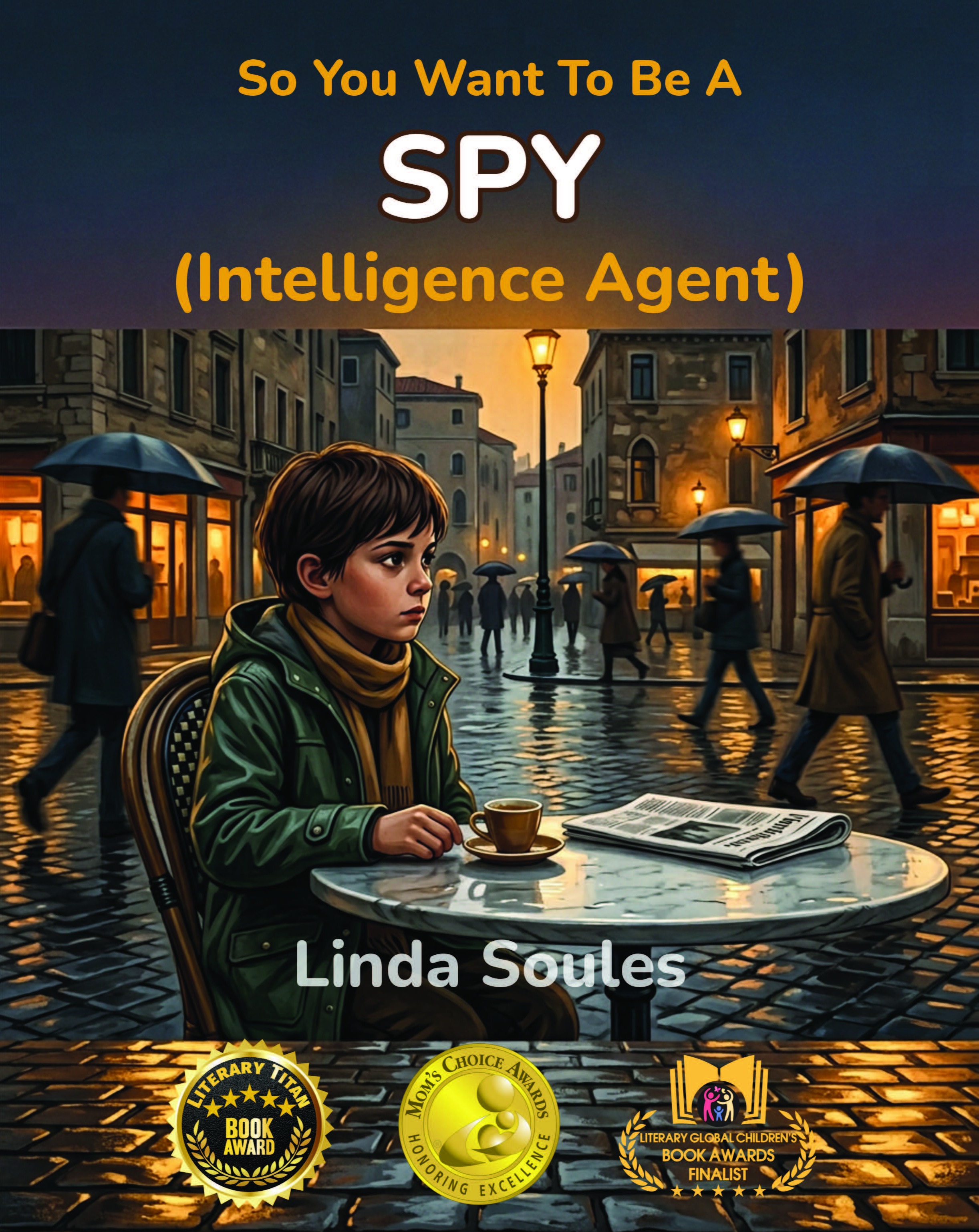
So You Want To Be A Spy (Intelligence Agent) cover
Documentary / Non-Fiction Documentary Series

So You Want To Be A Spy (Intelligence Agent)

by Linda Soules · 27 pages

Logline

A children's career guide invites curious young readers to imagine becoming an intelligence agent, explaining the real work of analysis, tradecraft, secrecy, and honesty, and the discipline needed to overcome bias and tell uncomfortable tru

Synopsis

The book opens by asking readers to imagine the world's hardest puzzle, with pieces arriving from many sources and most of them missing. It frames intelligence as gathering, evaluating, and delivering knowledge to protect a country, and it stresses that trust-building matters more than combat skill. Early chapters explain what agents do, from analysts at ordinary desks to field officers living abroad under cover, and describe the plain, windowless offices and cafés where the work happens. The middle sections cover tradecraft and the realities of the job. Readers learn about cover identities, hidden cameras, encrypted devices, dead drops, and the trained memory. The book then balances the rewards of puzzle-solving and quiet protection against the hardships: long stretches of waiting, secrecy from loved ones, the 'need to know' rule, and the courage to report what the evidence shows rather than what leaders want to hear. Its biggest surprises are that most intelligence comes from open public sources and that the analyst's worst enemy is confirmation bias. A sample day, from the morning review to the evening briefing, shows the rhythm of analysis, contact meetings, report writing, and language study. The book describes the supporting cast of handlers, technical officers, linguists, and supervisors, and lists the key qualities of a spy: observation, patience, compartmentalization, analytical skepticism, and discretion. It adds unexpected needs such as acting ability, comfort saying 'I don't know,' and a grasp of human psychology. Profiles of Virginia Hall, Noor Inayat Khan, Harriet Tubman, and Juan Pujol García (Garbo) bring the history to life, alongside fun facts like the WWII rubber-tank army and the Kryptos sculpture. The book ends with action. Readers get practice exercises: observation drills, source checking, a bias journal, pattern maps, and red-teaming a friend. A set of guiding questions, a glossary, and reading and website recommendations follow. The author's closing note argues that the hardest part of the job is honesty, not danger, and that this commitment to truth belongs to anyone who keeps asking questions. The final line is the one every analyst lives by: 'How do I know? Keep asking.'

AI Pitch Package

For producers, scouts & managers

Logline

A former intelligence analyst hosts a series that guides curious young viewers through the real work of spying, from open-source puzzles to cover identities and dead drops, arguing that the hardest part of the job is honesty, not danger.

Short synopsis

Spy movies sell car chases. This series shows kids what intelligence work actually is: a puzzle with most of the pieces missing. Adapted from Linda Soules's children's career guide, each episode takes one real piece of the job, such as analysis, tradecraft, cover, or the 'need to know' rule, and makes it hands-on. Young viewers meet analysts at plain desks and field officers abroad. They learn that most intelligence comes from public sources and that confirmation bias is an analyst's worst enemy. Dramatized profiles of Virginia Hall, Noor Inayat Khan, Harriet Tubman, and Juan Pujol García (Garbo) supply the history. Every episode ends with a practice exercise and the question that closes the book: 'How do I know? Keep asking.'

Extended synopsis
The series opens with the book's central image: the world's hardest puzzle, with pieces arriving from many sources and most of them missing. Episode one defines intelligence as gathering, evaluating, and delivering knowledge to protect a country. It also delivers the book's first surprise, that trust-building matters more than combat skill. The host, a credible former analyst or officer, walks through the plain, windowless offices and ordinary cafés where the work happens, which sets the show's tone: demystifying, not glamorizing. The middle episodes take on tradecraft and the realities of the job. Cover identities, hidden cameras, encrypted devices, dead drops, and trained memory become demonstrations and kid-friendly challenges. The series then turns to the costs: long stretches of waiting, secrecy from loved ones, the 'need to know' rule, and the courage to report what the evidence shows rather than what leaders want to hear. A 'day in the life' episode follows the rhythm of morning review, contact meetings, report writing, language study, and the evening briefing, and introduces the supporting cast of handlers, technical officers, linguists, and supervisors. History comes through short dramatized profiles of Virginia Hall, Noor Inayat Khan, Harriet Tubman, and Juan Pujol García (Garbo). The profiles are paired with fun-fact segments such as the WWII inflatable rubber-tank army and the Kryptos sculpture's unbroken code. These segments supply the show's visual spectacle and a counterweight to the desk-work episodes. The back half is built around the book's exercises: observation drills, source checking, a bias journal, pattern maps, and red-teaming a friend. Each is staged as a challenge for kids on screen and for the audience at home. The finale lands on the author's thesis, that honesty is harder than danger and that the discipline of questioning belongs to anyone, and closes on the analyst's mantra: 'How do I know? Keep asking.'
Why it adapts
The hook is a clean inversion that sells on a poster: 'Real spies don't do what you think.' The visuals are built in. The rubber-tank army, dead drops, hidden cameras, cover-identity transformations, and the Kryptos sculpture give each episode a spectacle beat. The plain windowless offices set up a funny contrast with Hollywood spy imagery. The Virginia Hall, Noor Inayat Khan, Harriet Tubman, and Garbo profiles can be done as stylized reenactments or animated sequences and give the show strong, distinctive historical characters. The book's structure already works as a series. Every topic has a built-in interactive element: observation drills, bias journals, pattern maps, and red-teaming a friend. These can become on-screen kid challenges, a recurring 'How do I know?' segment, and companion classroom materials. The book's surprises, that most intelligence is open-source and that confirmation bias is the enemy, give episodes reveal moments and a media-literacy angle that educators and parents value. The risk is that the source is thin and has no plot, so success depends on the host, the production budget for reenactments, and rigor in sourcing real experts. Developed with a credible former analyst as host and consultant, the project is a low-risk, brand-safe family and educational title with long shelf life, curriculum licensing potential, and a companion book and activity line.
Format recommendation
Documentary Series

The source is a 27-page children's career guide with no single narrative, so it doesn't support a feature. It is modular by design, with discrete topics, profiles, and exercises that map to short standalone episodes. A 6-8 episode half-hour family documentary series, with a host, expert interviews, and dramatized history segments, is the honest fit.

Comp titles
Spycraft (Netflix, 2021)
Same subject, with real tradecraft explained by former operatives. This is the adult version of what this series would do for kids and families.
Ask the StoryBots (Netflix)
A proven model for turning curious-kid questions into playful, informative, host-led episodes that parents co-watch.
Mission Unstoppable (CBS, 2019)
Career-and-STEM inspiration for young viewers, built around real professionals and hands-on challenges.
A Call to Spy (2019)
Dramatizes Virginia Hall and Noor Inayat Khan, two of the book's four profiled figures. It shows there is audience appetite for these women's stories.
Operation Mincemeat (2021)
Recent WWII deception drama that supports the series' fun-fact and history segments on rubber tanks and Garbo-style misdirection.
Audience

Primary: kids 8-12 and their parents or teachers, co-viewing as a family. Secondary: curious teens and adults who like accessible true-spy content. The audience watches Ask the StoryBots, Mission Unstoppable, Brain Games, and Spycraft, and reads kids' STEM and career-explainer books. Strong classroom and library fit through media literacy, critical thinking, and women-in-history tie-ins.

Tone
curious playful demystifying interactive inspiring truth-seeking

Adaptation Readiness Score

66 / 100

Visual storytelling 70
Dialogue strength 42
Character distinctiveness 62
Hook strength 72
Format fit 62
Market timing 74
Strengths
  • The hook is pitch-ready: a hidden-world premise with a surprising thesis. Most intelligence comes from open sources, and the analyst's real enemy is confirmation bias, not danger. That gives a documentary series a clear, counterintuitive angle.
  • The historical profiles (Virginia Hall, Noor Inayat Khan, Harriet Tubman, Juan Pujol García 'Garbo') and fun facts (the WWII rubber-tank army, the Kryptos sculpture) are ready-made episode anchors with strong archival and recreation potential.
  • The book already has a clear structure: a day-in-the-life, tradecraft, the support cast, the qualities of a spy, and hands-on exercises. It maps naturally onto episodic segments and gives an interactive or educational series a built-in format.
Adaptation friction
  • At 27 pages and aimed at young readers, the book is a framework, not a full narrative. A series would need substantial original research, interviews, and archival sourcing to fill runtime, and there is no through-line story or central character yet.
  • There is no dialogue, no named present-day subjects, and no scenes. A documentary depends on voices, such as former officers, analysts, and historians, and the book supplies none, so the human access has to be built from scratch.
  • The tone is a children's career guide, but the format is a documentary series. The audience (kids, families, classrooms, or general adults) needs defining, because it determines the platform, tone, episode length, and buyer.

More books in the directory
Listed on 2026-11-02
Back to directory