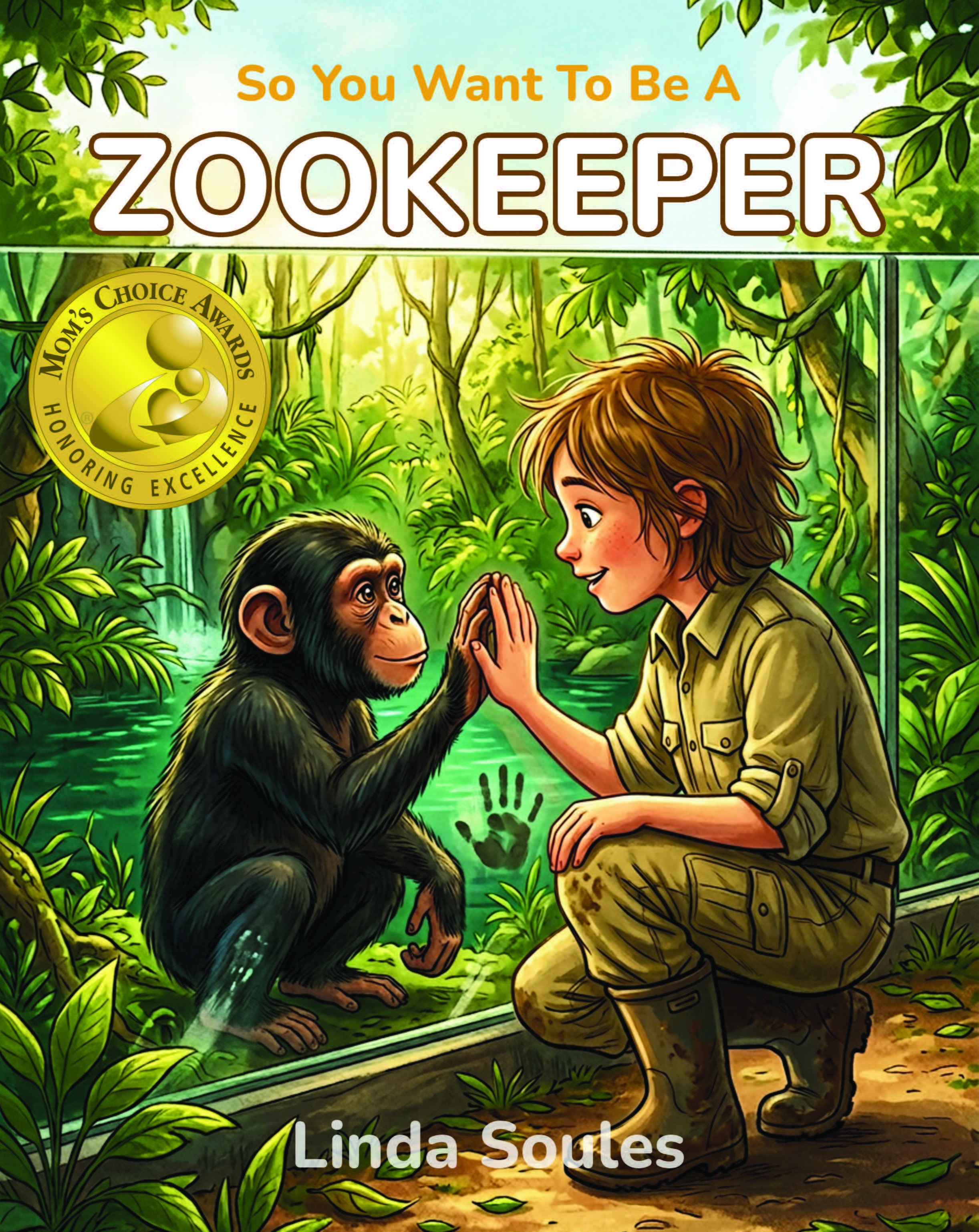
So You Want To Be A Zookeeper
by Linda Soules · 26 pages
Addressed directly to curious kids, this illustrated career guide follows an aspiring zookeeper's imagined path through daily routines, hard losses, conservation wins, and the patient trust-building that earns an elephant's greeting and pro
Synopsis
AI Pitch Package
For producers, scouts & managers
Logline
A determined kid dreaming of becoming a zookeeper learns that the job means shoveling dung, mourning losses, and protecting threatened species, and earns an elephant's trust one patient, positive-reinforcement step at a time.
Short synopsis
So You Want To Be A Zookeeper speaks straight to kids who think the job means cuddling animals, then shows what it really is: protecting them. A keeper's day starts before dawn with rounds, species-specific diets, enrichment puzzles, and behavioral logs. Even the waste is health data. The book is honest about the cost: animals get sick and die, and keepers carry those losses for decades. It also shows why the work matters, as modern zoos act as rescue centers behind the California condor's return from 22 birds to over 500, plus the Arabian oryx, black-footed ferret, red wolf, and whooping crane. It closes with an invitation to the reader: do you still want to be the person an elephant knows by footstep?
Extended synopsis
Why it adapts
The book is a modular career guide, not a single narrative arc, so it breaks naturally into short standalone episodes (a day's rounds, an enrichment puzzle, a vet visit, a species rescue). A feature would have nothing to dramatize, while a repeatable format with a young lead and a zoo team can run for seasons. The author's choice of episodic series is the right one for this IP.
Primary: kids 5-9 and their co-viewing parents, with a strong educator and library market for the STEM and career-exploration angle. Their screens already hold Wild Kratts, Octonauts, Molly of Denali, Ada Twist, Scientist, and Hero Elementary. Secondary: zoo and aquarium families, school field-trip audiences, and the Planet Earth and Our Planet family-viewing crowd who would watch a kid-sized version.
Adaptation Readiness Score
66 / 100
- Zoo settings, animal encounters, and keeper routines are highly visual, with built-in sensory moments such as dawn rounds, an elephant's rumbling greeting, and enrichment puzzles in action
- The emotional core is strong and mature: loving what you may lose. It gives a children's/family series a real heart and an unusual honesty about grief and responsibility
- Real conservation wins (California condor, Arabian oryx, black-footed ferret, red wolf, whooping crane) and profiles of Durrell, Embery, and Anthony supply ready-made episode topics with real-world stakes and a clear educational mission
- As a second-person career guide, it has no fixed protagonist, no dialogue, and no plot, so a series would need to invent its leads, relationships, and serialized arcs from scratch
- The structure is informational (daily routines, glossary, quiz, resource list) rather than narrative, so episodes need a story engine such as a recurring problem, a clock, or an animal-in-need to drive each half hour
- Animal-focused kids' and docu-style programming is a crowded, budget-sensitive space, and the book does not yet offer a distinctive tone, format, or on-screen host that sets it apart
- So You Want To Be A Firefighter by Linda Soules
- So You Want To Be A Video Game Designer by Linda Soules
- So You Want To Be A Dinosaur Hunter (Paleontologist) by Linda Soules
- So You Want To Be A Veterinarian by Linda Soules